Conditions
Gallstone Disease and Biliary Colic
What is it?
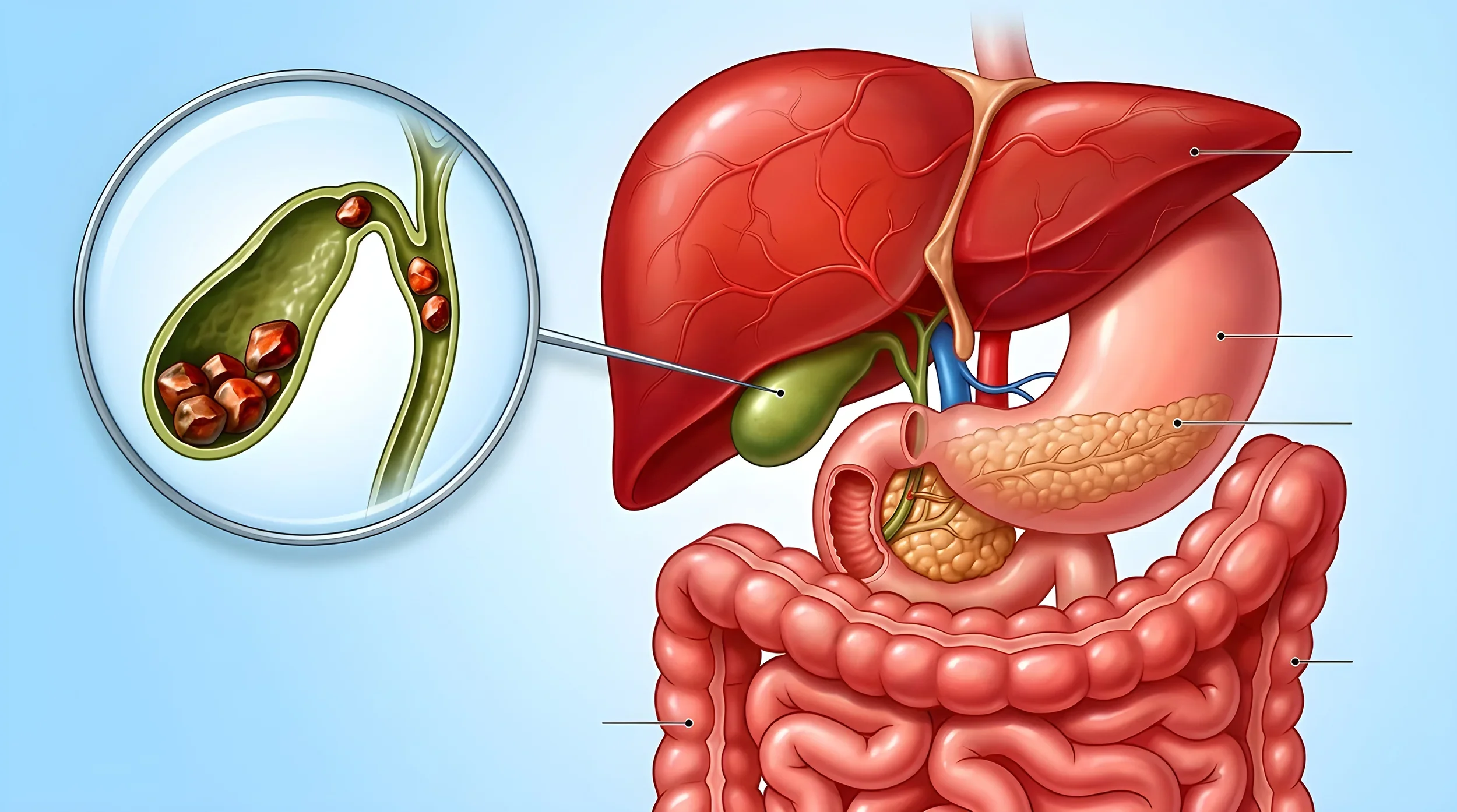
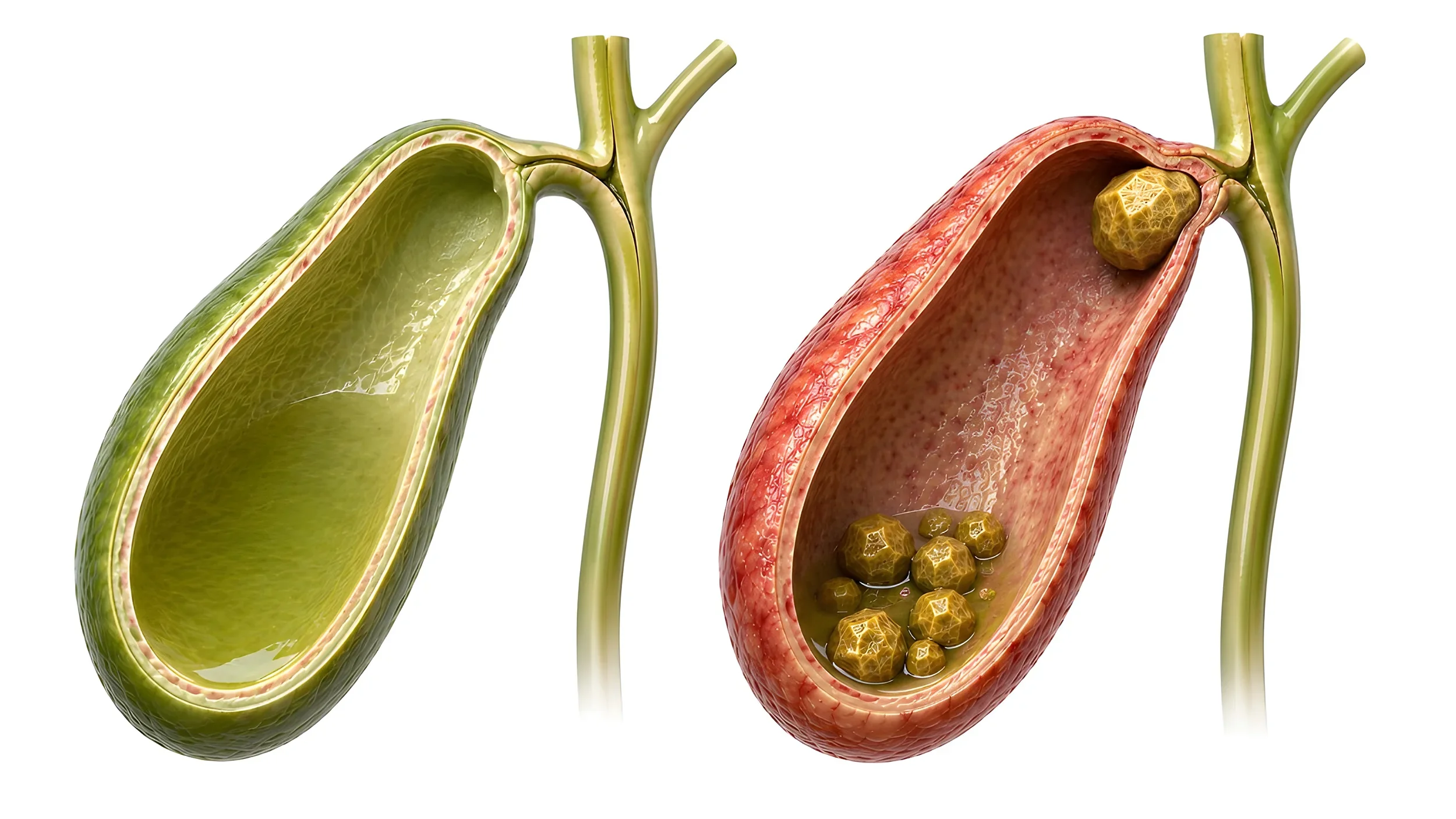
Your gallbladder is a small organ under your liver that stores bile, a fluid that helps you digest fat. Sometimes substances in bile (mostly cholesterol or bilirubin) crystallise and form hard deposits called gallstones. They can range from as small as a grain of sand to as large as a golf ball, and you can have one or many.
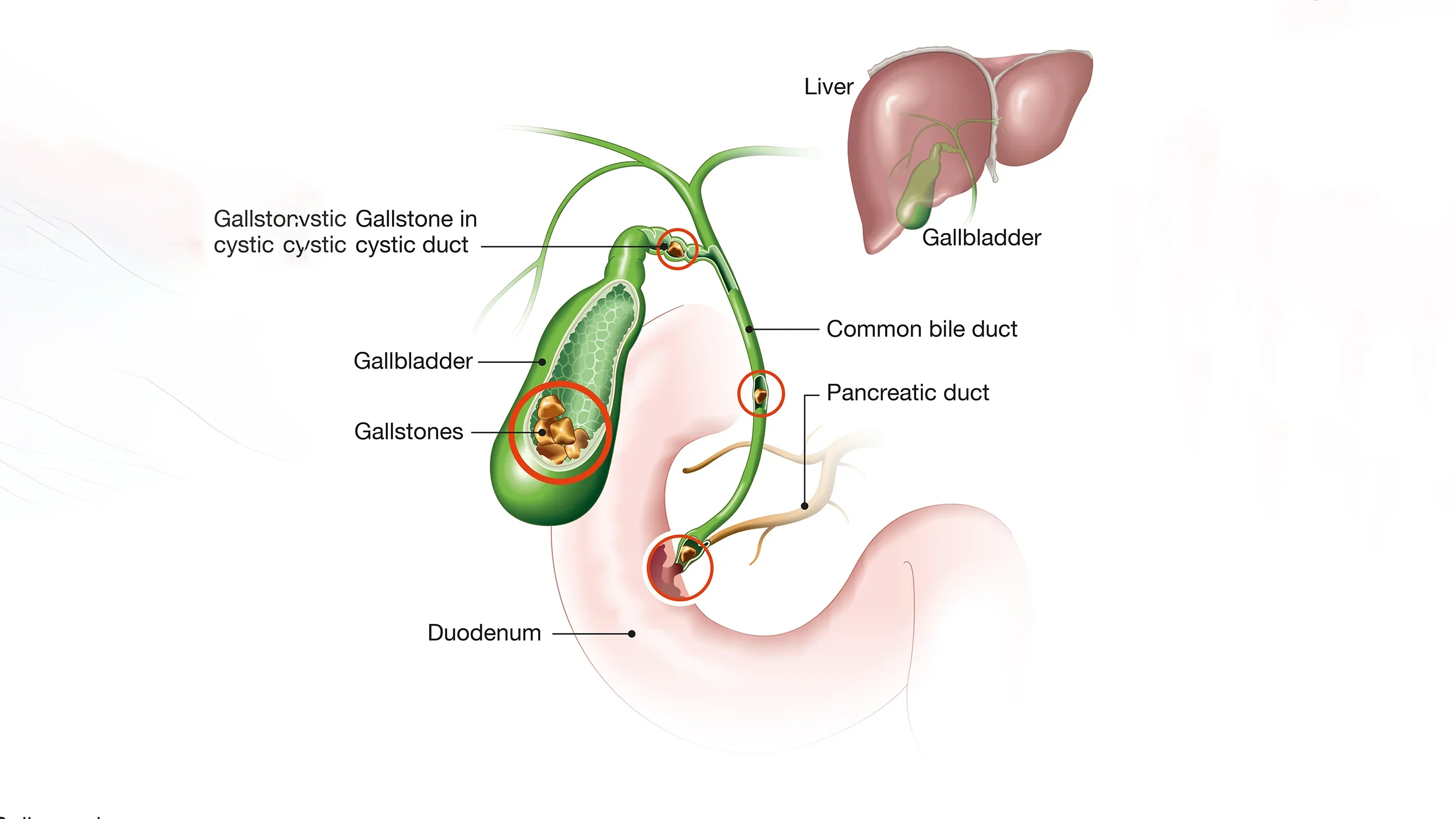
Often gallstones cause no problems and are never even noticed. Trouble starts when a stone blocks the opening of the gallbladder or the bile ducts. This blockage causes the gallbladder to squeeze against the stone, producing a pain episode known as biliary colic.
How common is it?
Gallstones are very common:
They affect roughly 10-15% of adults, with rates increasing with age.
They're more common in women than men, especially during and after pregnancy.
Other risk factors include obesity, rapid weight loss, a family history of gallstones, and certain medical conditions (like diabetes) or medications.
Many people with gallstones (about 80%) never develop symptoms. Only a minority go on to experience biliary colic or complications.
Other conditions gallstones can cause
Biliary colic is the most common problem gallstones cause, but it isn't the only one. If a stone causes a more persistent blockage or moves out of the gallbladder, it can lead to more serious conditions, including:
Cholecystitis — inflammation (and often infection) of the gallbladder, usually because a stone is stuck and blocking it for a prolonged period. Unlike biliary colic, the pain doesn't ease off after a few hours, and it's often accompanied by fever.
Cholangitis — infection of the bile ducts, which happens when a stone blocks the flow of bile out of the liver. This is a more serious condition, as the infection can spread into the bloodstream, and it requires urgent treatment.
Gallstone pancreatitis — inflammation of the pancreas, triggered when a stone blocks the duct shared by the pancreas and bile system. This causes severe abdominal pain, often spreading to the back, and can range from mild to life-threatening.
These three conditions are why biliary colic shouldn't be ignored if it keeps happening — each episode carries some risk of a stone causing a more serious blockage. They're also why the warning signs below matter: fever, jaundice, and pain that won't settle can be early clues that one of these complications is developing rather than a typical colic episode.
What symptoms should you look out for?
Typical biliary colic symptoms
Sudden, intense pain in the upper right or middle of the abdomen, often spreading to the right shoulder blade or back
Pain that often starts within an hour after eating, especially fatty or large meals
Episodes that typically last anywhere from 30 minutes to a few hours, then ease off
Nausea, sometimes with vomiting
Warning Signs — Seek Prompt Care
These may suggest a complication such as gallbladder infection (cholecystitis), a blocked bile duct, or pancreatitis:
Pain lasting longer than a few hours that doesn't settle
Fever or chills
Yellowing of the skin or eyes (jaundice)
Dark urine or pale, clay-coloured stools
Persistent vomiting or inability to keep fluids down
If you experience any of these warning signs, seek medical care promptly (emergency department).
What are the treatment options?
If you have gallstones but no symptoms: Often no treatment is needed — many people simply live with gallstones that never cause an issue.
If you're having biliary colic episodes:
Lifestyle and dietary adjustments
Reducing fatty and fried foods can lessen the frequency of attacks
Maintaining a steady, healthy weight (rapid weight loss can actually worsen gallstones)
Pain relief during an episode
Over-the-counter or prescribed pain relief as advised by your doctor
Anti-nausea medication if needed
Surgery — removal of the gallbladder (cholecystectomy)
This is the definitive treatment and is usually recommended once you've had symptomatic episodes, since they tend to recur and can lead to complications.
Most commonly done as laparoscopic (keyhole) surgery, using small incisions, a camera, and instruments — recovery is typically within 1-2 weeks.
In some cases (e.g. very inflamed gallbladders, prior operations, or scarring), an open surgical approach or modified laparoscopic operation may be needed instead.
The gallbladder isn't essential for life — most people digest fat normally afterward, sometimes with minor adjustments to diet in the first few weeks. Diarrhoea may occur initially, but usually settles with time.
Other options (less common)
Medications to dissolve certain types of stones exist but are expensive, slow-acting, and often have limited results. They are generally not used for stones within the gallbladder.
A procedure called ERCP may be used if a stone has moved into the bile duct, to remove it endoscopically, sometimes before or after gallbladder removal.
Summary
Gallstones are very common and often don't cause symptoms.
Biliary colic causes recognisable episodes of upper abdominal pain, often after fatty meals.
Watch for fever, jaundice (yellow skin, eyes or dark urine), or pain that won't settle — these need urgent care.
Surgical removal of the gallbladder is the standard, effective treatment for recurrent symptoms, and most people return to normal life and diet afterward.
If you have any questions regarding your symptoms or gallstones, please make an appointment to discuss with me.
For surgical treatment options, see Gallbladder Surgery (Cholecystectomy).
Next Step
A referral is required prior to your appointment. Call (03) 9923 8066 or email admin@shilton.net.au to arrange a consultation.