PROCEDURES
Surgery for Oesophageal and Gastric Cancer
For background on Oesophageal and Gastric cancer, see Oesophageal & Stomach Cancer.
What is it?
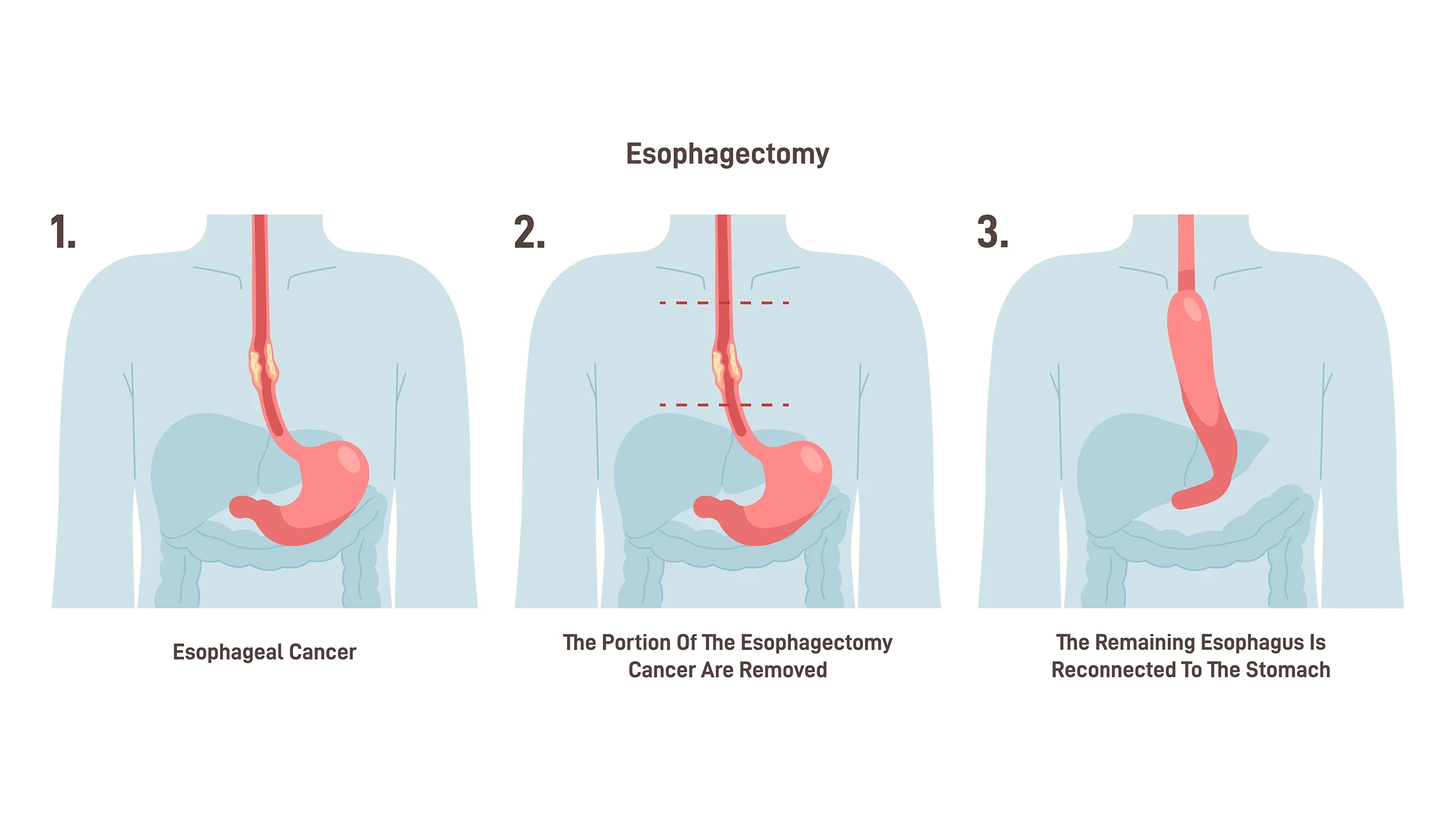
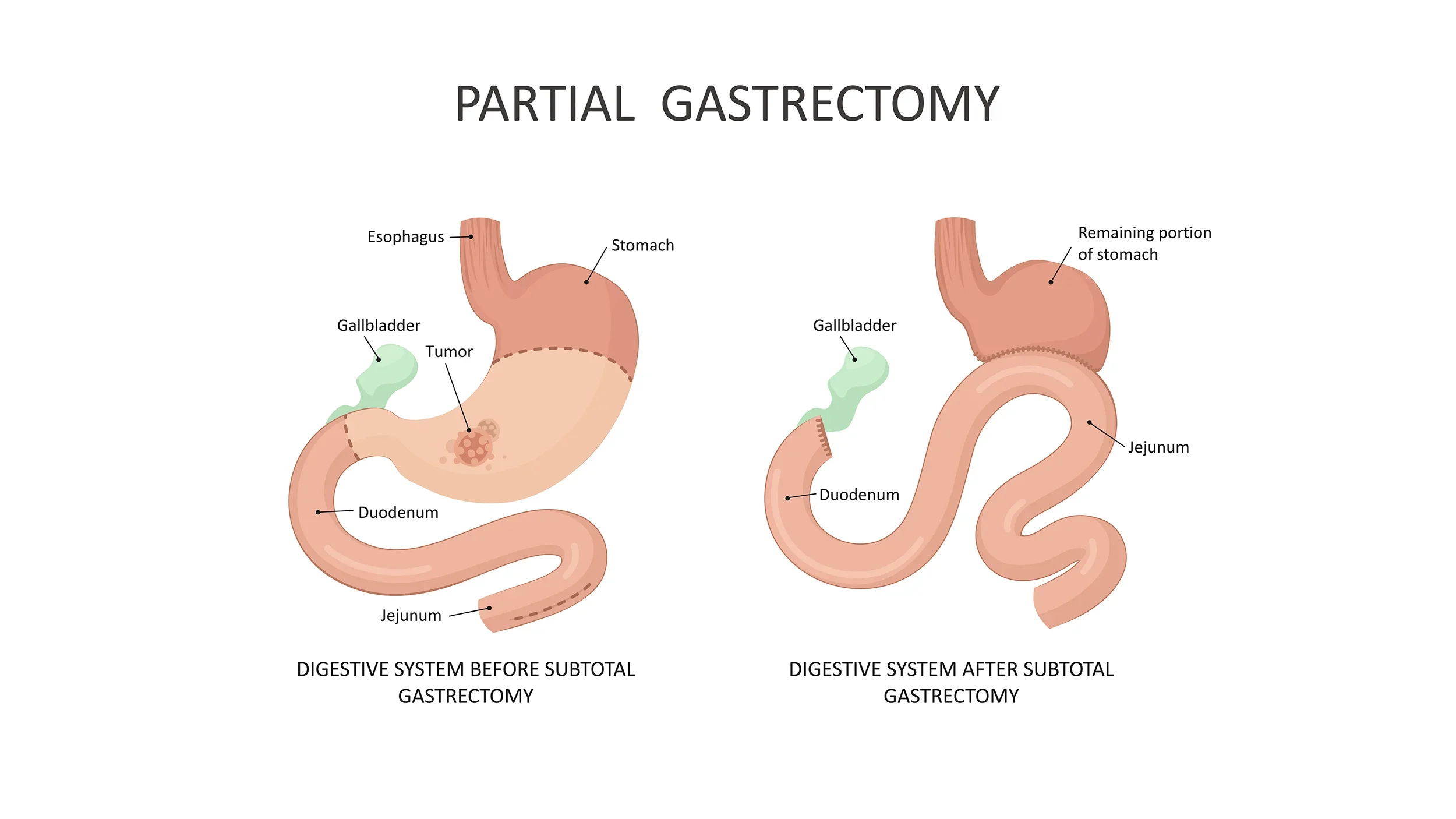
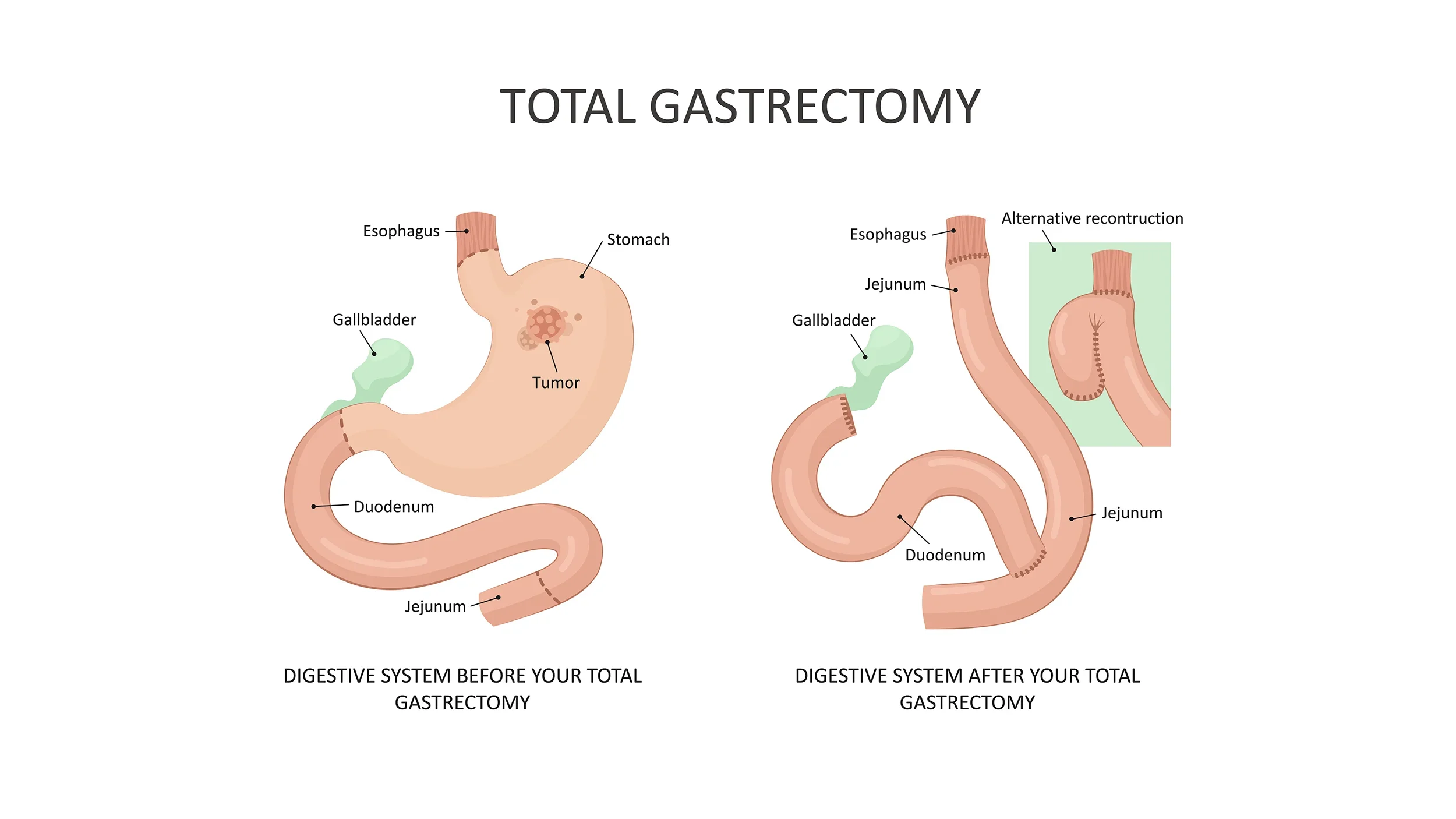
Surgery for oesophageal or gastric cancer involves removing the part of the oesophagus (gullet) or stomach affected by cancer, along with nearby lymph nodes. Depending on the location and extent of the cancer, this may be an oesophagectomy (removal of part or all of the oesophagus) or a gastrectomy (removal of part or all of the stomach, described as partial or total).
Because the oesophagus and stomach form a continuous passage for food, removing part of that requires reconstructing that passage — most often by reshaping the stomach into a narrower tube and joining it to the remaining oesophagus, or by bringing up a loop of bowel to reconstruct the digestive tract after a gastrectomy. This reconstruction restores a route for food to pass through, though it works a little differently to before.
This operation is usually one part of a broader treatment plan. Many people have chemotherapy, or chemotherapy combined with radiotherapy, before surgery to shrink the cancer, and sometimes further chemotherapy afterward. The multidisciplinary team — surgeon, medical oncologist, radiation oncologist, and others — agree on the right combination and order of treatments for your individual situation.
What are the benefits?
Removes the cancer — surgery aims to take out all of the cancer along with a margin of healthy tissue and the surrounding lymph nodes, giving the best chance of long-term control or cure.
Provides accurate staging — examining the removed tissue and lymph nodes gives precise information about the cancer, which guides decisions about further treatment.
Restores the ability to eat normally — most people return to eating a reasonably normal diet after recovery, even if some adjustments are needed.
Part of a curative treatment plan — when combined with chemotherapy or radiotherapy, surgery gives the best overall chance of clearing the cancer completely, in situations where this is achievable.
What are the alternatives?
No surgery — for some people, particularly if the cancer is advanced or if surgery carries too much risk because of other health issues, treatment may focus on chemotherapy, radiotherapy, or a combination of these, aimed at controlling the cancer or relieving symptoms rather than removing it.
Endoscopic treatment — for very early cancers confined to the lining, it's sometimes possible to remove the abnormal tissue during endoscopy, without the need for major surgery.
Stenting or other symptom-directed treatment — if the goal is to relieve symptoms such as difficulty swallowing rather than to cure the cancer, a stent or other palliative treatment may be recommended instead of, or as well as, other therapies.
Chemotherapy or chemoradiotherapy alone — used either as the primary treatment when surgery isn't suitable, or as part of the lead-up to surgery.
I will discuss which of these options are appropriate for you, and why surgery is or isn't being recommended in your circumstances.
What are the risks of surgery?
Surgery for oesophageal and gastric cancer is a major operation, and like any major surgery and anaesthetic, it carries risks. I will discuss these with you in more detail, but in general terms:
Common, usually minor — wound discomfort, temporary difficulty with eating or drinking while your digestive system adjusts, needing to eat smaller and more frequent meals, and some early changes in bowel habit.
Less common — chest infection, wound infection, or a collection of fluid near the surgical site.
Uncommon but more serious — leakage from the new join (anastomosis) in the digestive tract, bleeding, blood clots, injury to nearby structures, or complications affecting the heart or lungs, some of which may require further treatment or a further operation.
Most people recover from this operation without a serious complication, though the risks are higher than for smaller operations, given the scale of surgery involved. Usually any complications can be well managed, but may require further procedures and a prolonged hospital stay to resolve them. Your fitness for surgery, and ways to reduce these risks, will be discussed with you beforehand.
What does recovery look like?
Hospital stay — typically one to two weeks, sometimes longer, including a short period of closer monitoring (in a high-dependency or intensive care unit) immediately after surgery.
Eating and drinking — you'll usually start with fluids and build up gradually to soft, then solid, food over the following weeks. Some people have a feeding tube placed at the time of surgery to support nutrition while your digestive system heals.
Diet long-term — most people return to a fairly normal diet, though eating smaller, more frequent meals rather than large ones tends to suit the digestive system better after this surgery. A dietitian will support you through this transition.
Return to normal activity — recovery is gradual, with most people needing several weeks to a few months before returning to full normal activity, including work.
Follow-up — you'll be reviewed regularly with me and the wider team after surgery, both to support your recovery and to plan any further treatment.
Summary
Surgery for oesophageal or gastric cancer removes the cancer along with nearby lymph nodes, and usually involves reconstructing part of the digestive tract.
It's typically one part of a broader treatment plan that may include chemotherapy or radiotherapy.
As with any major surgery, there are risks, though most people recover without a serious complication.
Recovery takes time, with a gradual return to eating and to normal activity over weeks to months.
This information is general in nature and is not intended as a substitute for a full discussion of the risks and benefits of surgery considering your medical issues. If you have further questions or have been diagnosed with oesophageal or gastric cancer, please make an appointment.
Next Step
A referral from your GP is required prior to your appointment. Call (03) 9923 8066 or email admin@shilton.net.au.