Conditions
Reflux Disease and Hiatus Hernia
What is it?
Between your oesophagus (gullet) and stomach there's a ring of muscle called the lower oesophageal sphincter, which normally acts as a one-way valve, letting food down into the stomach while keeping stomach acid where it belongs. Gastro-oesophageal reflux disease (GORD) occurs when this valve doesn't work as well as it should, allowing acid and stomach contents to flow back up into the oesophagus, causing irritation.
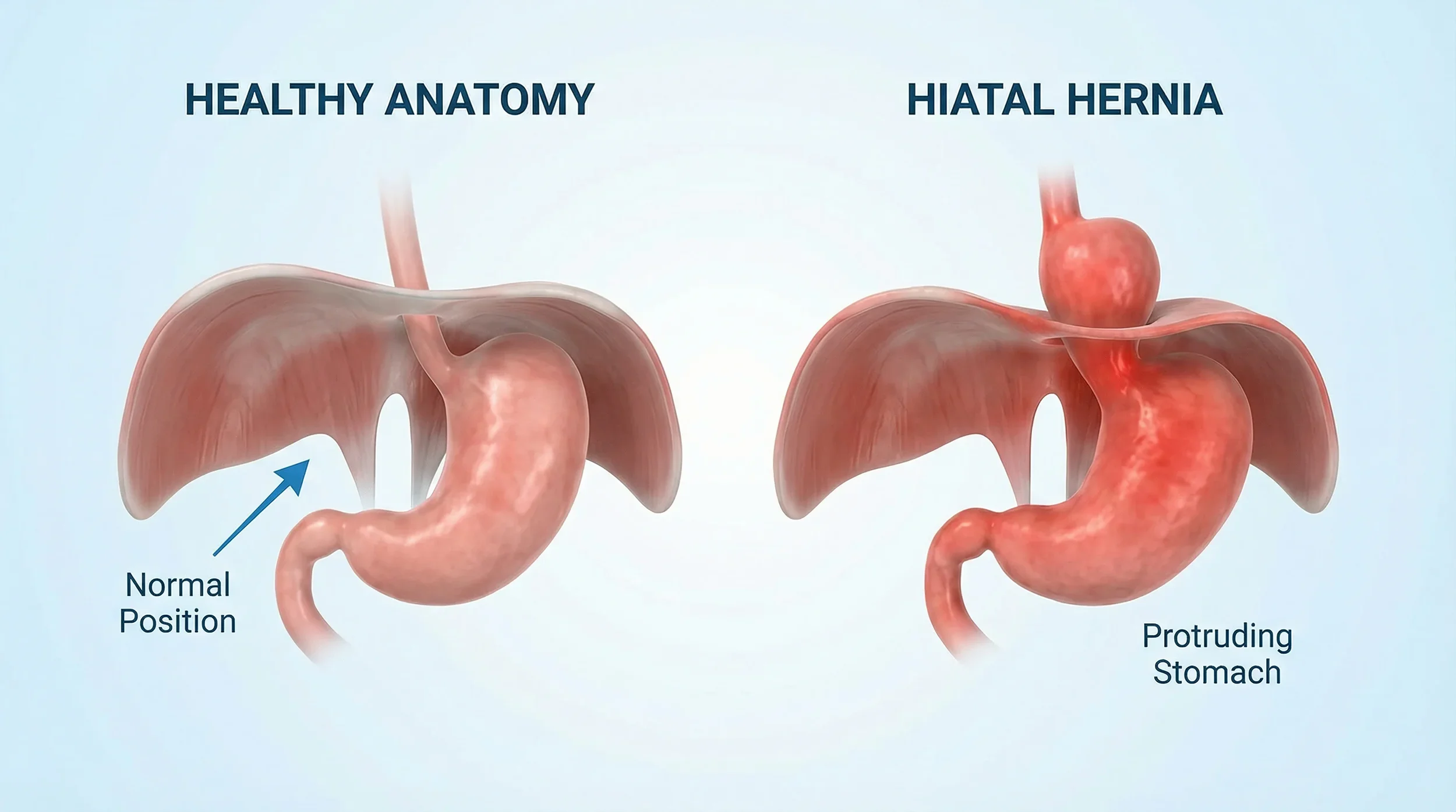
A hiatus hernia happens when part of the stomach pushes up through the diaphragm (the sheet of muscle separating your chest and abdomen) into the chest cavity. This can weaken the valve mechanism described above, making reflux more likely. Many people have a hiatus hernia and reflux together, though it's possible to have either one without the other.
How common is it?
Both conditions are very common:
Reflux symptoms affect around 1 in 5 adults in Australia, with many experiencing it at least occasionally.
Hiatus hernias become more common with age, and are present in up to half of people over 50, though many never notice any symptoms from it.
Risk factors for both include being overweight, pregnancy, smoking, and a family history.
Most people with a small hiatus hernia have mild or no symptoms — it's often found incidentally during tests for something else.
Other conditions reflux can cause
For most people, GORD causes troublesome but manageable symptoms. However, if acid reflux is frequent or longstanding, it can occasionally lead to further problems, including:
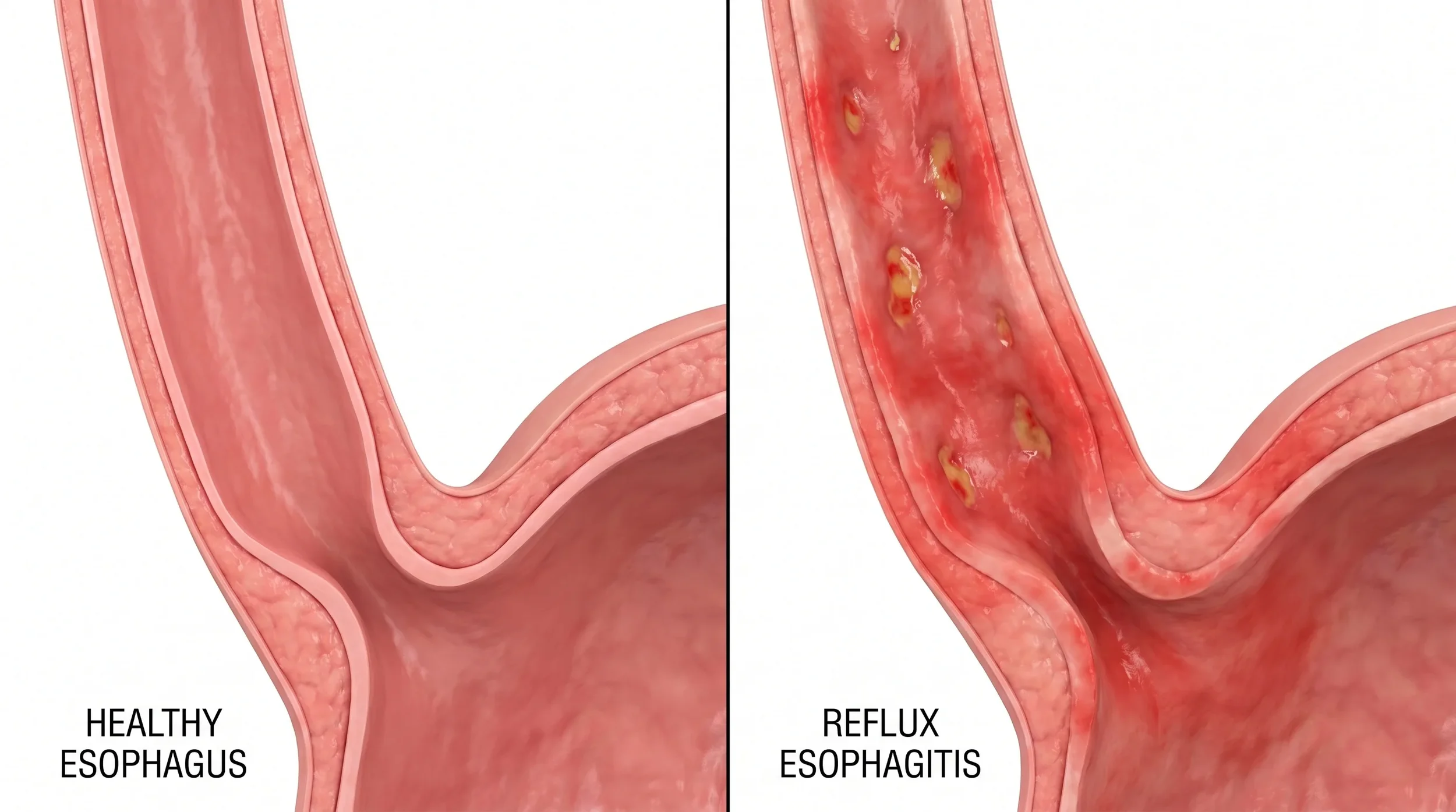
Oesophagitis — inflammation of the oesophagus lining caused by repeated acid exposure, which can sometimes cause discomfort on swallowing or, rarely, bleeding.
Oesophageal stricture — narrowing of the oesophagus from long-term inflammation and scarring, which can cause food to stick or swallowing to become difficult.
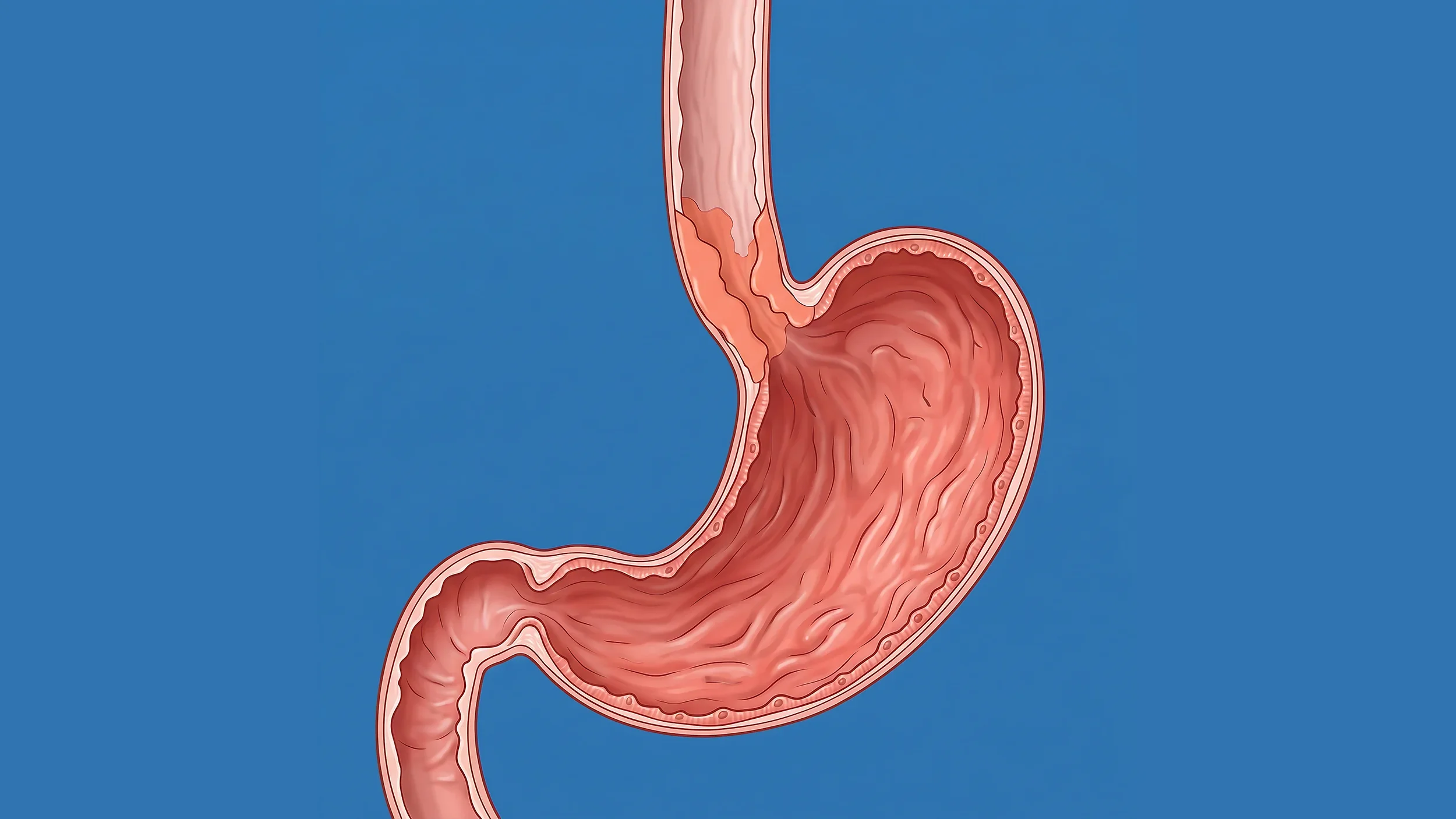
Barrett's oesophagus — a change in the cells lining the lower oesophagus, thought to be the oesophagus's response to repeated acid exposure. It's usually symptomless itself but is monitored because it carries a small increased risk of oesophageal cancer over time.
Oesophageal cancer — a rare but serious long-term complication of untreated reflux, usually developing after years of damage to the oesophageal lining (often via Barrett's oesophagus). This is why persistent reflux, especially with warning signs like swallowing difficulty, sudden change in reflux symptoms or weight loss, should be properly assessed.
These are uncommon, but it is important to keep long term reflux under control.
There are also a range of other common conditions that may be caused, or worsened, by reflux, such as chronic cough, voice change, a lump in the throat (globus), sinusitis, or even middle ear issues.
What symptoms should you look out for?
Typical reflux symptoms
A burning sensation rising from the stomach or lower chest up towards the throat (heartburn)
A sour or bitter taste in the mouth, or a feeling of food/acid coming back up (regurgitation)
Symptoms that are often worse after meals, when bending over, or lying down (e.g. at night)
A persistent cough, hoarse voice, or sensation of a lump in the throat
Hiatus hernia symptoms
When present, often overlap with reflux but can also include:
A feeling of fullness or discomfort in the upper abdomen or lower chest after eating
Belching or bloating
Warning Signs — Seek Prompt Care
These may suggest a complication or a different underlying cause that needs to be ruled out:
Difficulty or pain swallowing food, or food getting stuck — never ignore this, even if it occurs just a single time
Unintentional weight loss
Vomiting blood, or vomit or stool that looks like coffee grounds or is black and tarry
Persistent vomiting
Chest pain that's severe, crushing, or comes with breathlessness, sweating, or pain spreading to the arm or jaw (this needs emergency assessment to rule out a heart problem)
New reflux symptoms appearing for the first time over the age of 55, particularly alongside any of the above symptoms
If you experience any of these warning signs, seek medical care promptly (emergency department for chest pain or vomiting blood; an urgent GP appointment for the others).
What are the treatment options?
If your symptoms are mild or occasional: Lifestyle changes alone are often enough, and medications will control reflux for most people.
If you're having regular or troublesome symptoms:
Lifestyle and dietary adjustments
Losing weight if overweight, as this is one of the most effective measures
Avoiding trigger foods, such as fatty or spicy meals, caffeine, alcohol, and chocolate
Eating smaller meals and avoiding eating within 2-3 hours of going to bed
Raising the head of the bed slightly, or sleeping on multiple pillows
Stopping smoking, if applicable
Medication
Antacids (e.g. Gaviscon, Mylanta, Quick Eze) for quick, short-term relief of mild symptoms
Proton pump inhibitors (PPIs), such as pantoprazole (Somac) or esomeprazole (Nexium), which reduce acid production and are the mainstay of treatment for ongoing symptoms
H2 receptor antagonists (e.g. nizatidine) as an alternative or add-on if PPIs aren't fully effective
Surgery — keyhole repair (laparoscopic hiatus hernia repair and fundoplication)
This may be considered if symptoms persist despite medication, if you can't tolerate long-term medication, or if there's a large hiatus hernia causing symptoms.
The procedure involves repairing any hiatus hernia and wrapping the top of the stomach around the lower oesophagus to reinforce the valve.
It's done via laparoscopic (keyhole) surgery in most cases. Recovery is usually within 1-2 weeks from the surgery itself, but a modified diet is required for at least 6 weeks afterwards.
Most people have significant improvement in symptoms afterward, though some experience temporary bloating or difficulty belching while adjusting.
Summary
Reflux (GORD) and hiatus hernia are both very common, and often occur together.
Typical symptoms are heartburn and regurgitation, often worse after eating or lying down.
Watch for swallowing difficulty, weight loss, or signs of bleeding — these need prompt assessment.
Most people are managed successfully with lifestyle changes and medication; surgery is a good option if reflux is not controlled or there is an enlarging hiatus hernia.
If you have any questions regarding your symptoms or management of reflux or a hiatus hernia, please make an appointment to discuss with me. For surgical treatment options, see Anti-Reflux Surgery.
Next Step
A referral is required prior to your appointment. Call (03) 9923 8066 or email admin@shilton.net.au to arrange a consultation.