PROCEDURES
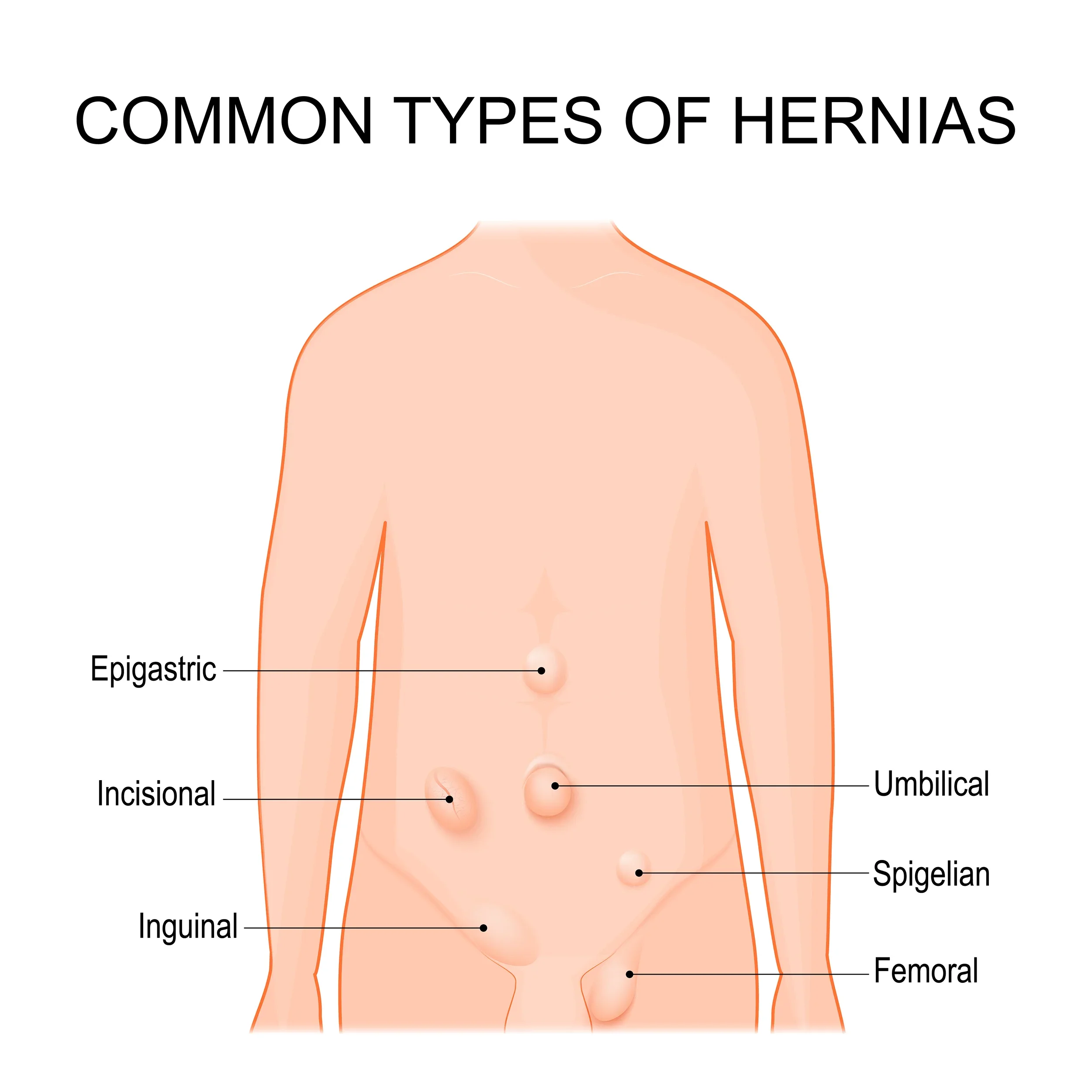
Hernia Repair (Inguinal, Umbilical, Ventral and Incisional)
For background on hernias as a condition, see Hernias (Inguinal, Umbilical & Abdominal Wall).
What is it?
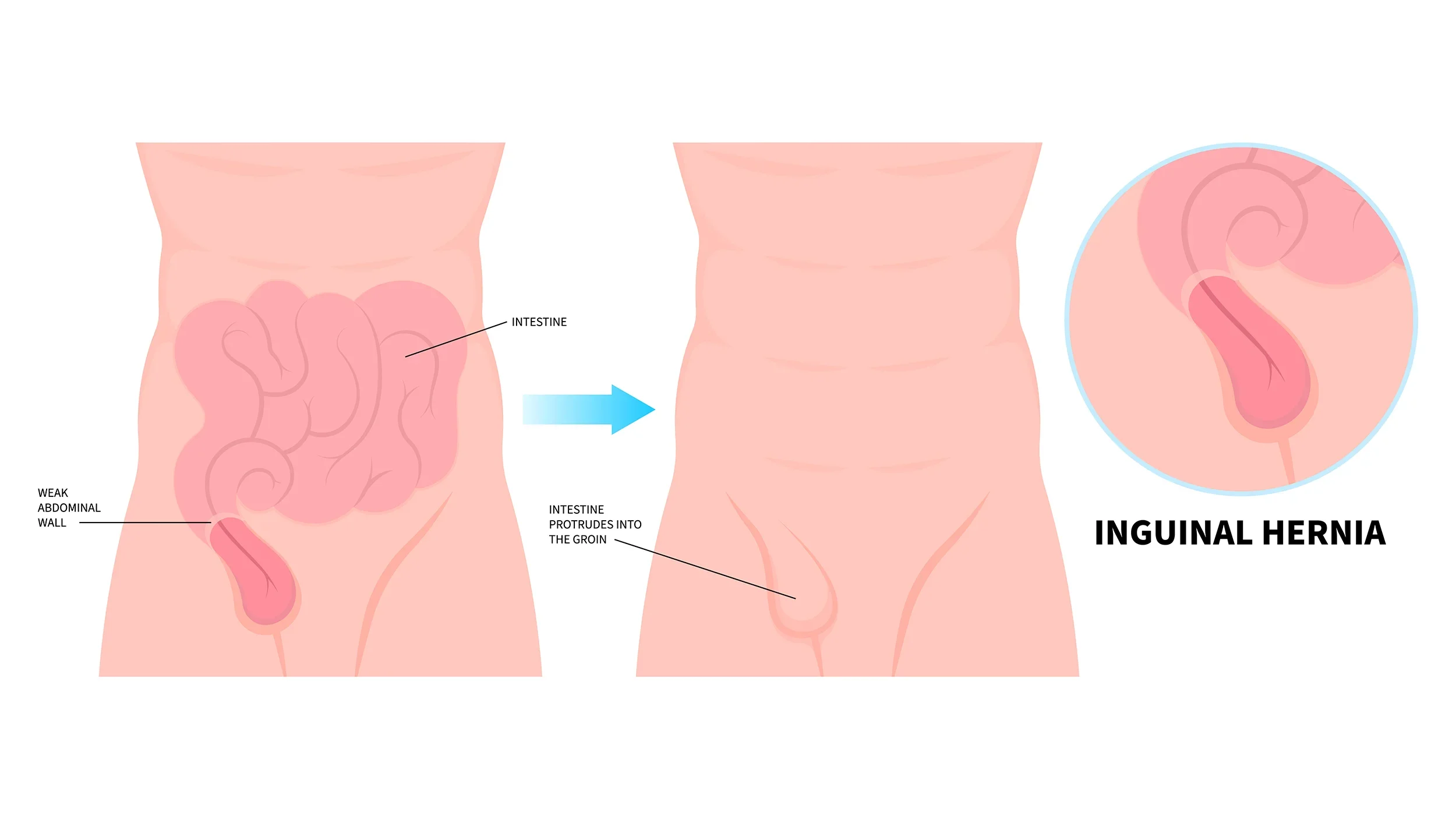
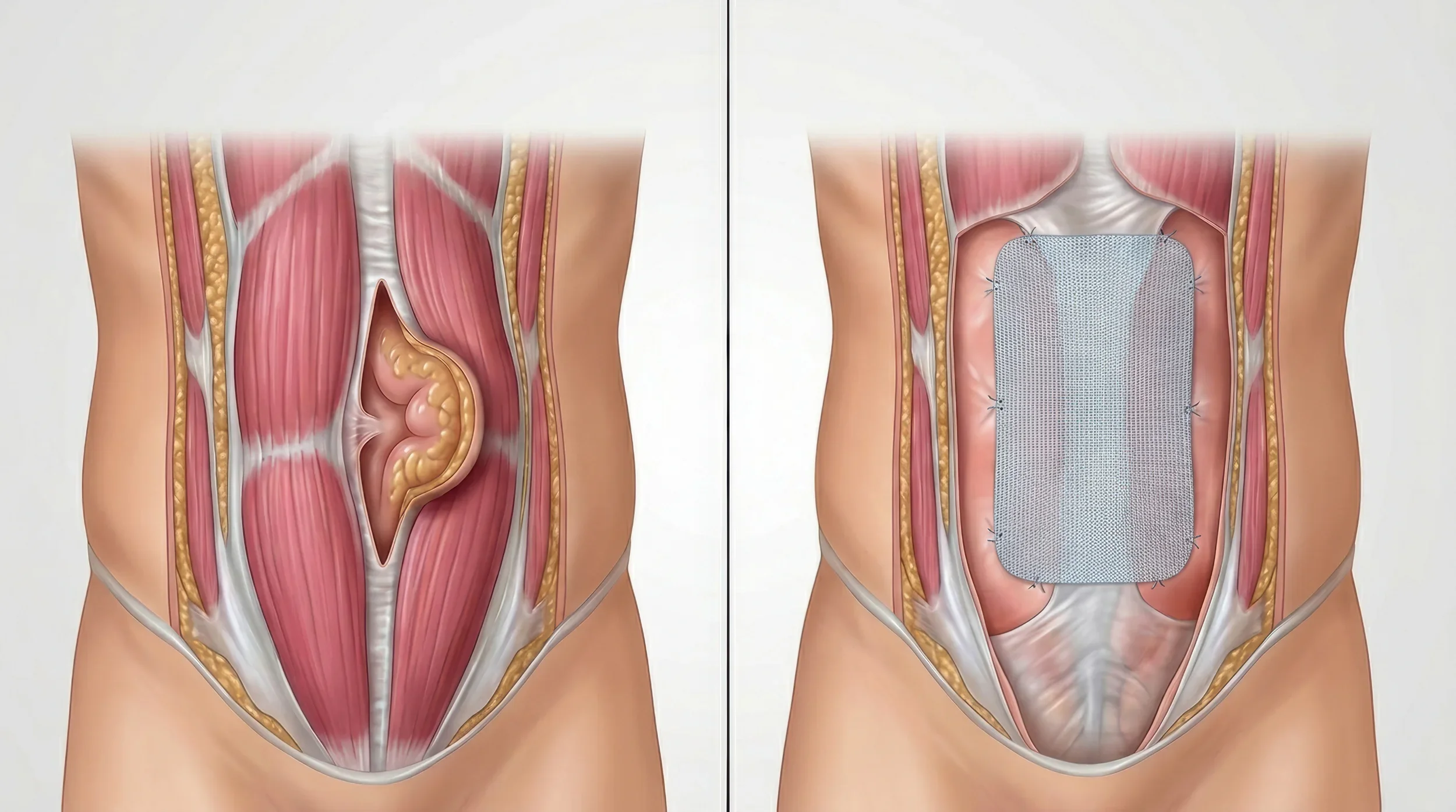
A hernia repair is an operation to correct a weakness or gap in the abdominal wall through which fat or bowel has bulged. The repair involves closing this defect and, in most cases, reinforcing it with a mesh to reduce the chance of the hernia returning.
The operation may be done as laparoscopic (keyhole) surgery, using a few small cuts through which a camera and instruments are passed, or as an open repair, through a single incision over the hernia. The approach I recommend depends on the type, size, and location of your hernia, as well as your surgical history.
Hernias do not heal on their own, so repair is the only way to permanently correct the defect.
What are the benefits?
Resolves the bulge and discomfort — most people who have surgery for a symptomatic hernia get relief from their pain or abnormal sensations.
Prevents enlargement — hernias tend to grow larger over time if left unrepaired. Surgery prevents this.
Reduces the risk of complications — it lowers the future risk of incarceration (the hernia becoming stuck) or strangulation (loss of blood supply to trapped tissue), which can be surgical emergencies.
Definitive treatment — unlike a truss or lifestyle changes, surgery corrects the underlying defect rather than just managing symptoms.
What are the alternatives?
Watchful waiting — reasonable for some small, symptom-free hernias, with monitoring for any change in size or symptoms. Inguinal hernias are usually still offered repair, as they tend to enlarge over time and the risk of complications accumulates.
A truss or support garment — may ease discomfort but does not treat the underlying defect or prevent complications. This is generally most useful for people who are not able to have surgery.
Lifestyle measures — avoiding heavy lifting, managing persistent coughing or constipation, and achieving a healthy weight can reduce strain on the hernia, but won't close the defect itself.
None of these alternatives correct the underlying weakness in the abdominal wall, which is why surgery is generally recommended once a hernia is causing symptoms, enlarging, or carries a significant risk of complications.
What are the risks of surgery?
Hernia repair is a common and generally safe operation, but like any surgery and anaesthetic, it carries some risks. I will discuss these with you in more detail, but in general terms:
Common, usually minor — bruising, wound discomfort, temporary swelling or fluid collection (seroma) around the repair, and an awareness or tightness at the site as it heals.
Less common — wound infection, a collection of blood or fluid requiring drainage, or bleeding.
Uncommon but more serious — recurrence of the hernia, persistent or chronic pain at the repair site, injury to nearby structures (such as bowel, bladder, nerves, blood vessels, or, for inguinal hernias, the structures of the spermatic cord in males), or mesh infection, which may require further treatment or a further operation.
Most people recover from this operation without any significant problems. The overall risk of serious complications is low.
What does recovery look like?
Hospital stay — laparoscopic repair is often done as a day case or with one night's stay. Open repair, particularly for larger or incisional hernias, may require a longer stay.
Return to normal activity — most people are back to light activities within a few days, and to full activity, including heavy lifting, after six weeks. Larger or more complex repairs may take longer to fully recover from.
Wound care — small dressings cover the cuts and can be removed after a week.
Follow-up — you will have an appointment to review with me after your surgery.
Summary
Hernia repair is a common, effective operation for symptomatic, enlarging, or high-risk hernias.
It may be done by keyhole or open surgery, usually with mesh reinforcement, depending on the hernia type and your circumstances.
It carries a low overall risk of serious complications, though, as with any surgery, some risk exists.
Most people recover well, with resolution of their symptoms and a low chance of recurrence.
This information is general in nature and is not intended as a substitute for a full discussion of the risks and benefits of surgery considering your medical issues. If you have further questions or want to discuss if this operation is right for you, please make an appointment.
Next Step
A referral from your GP is required prior to your appointment. Call (03) 9923 8066 or email admin@shilton.net.au.