PROCEDURES
Gastroscopy
For background on conditions that may require investigation with a gastroscopy, see Conditions and Procedures.
What is it?
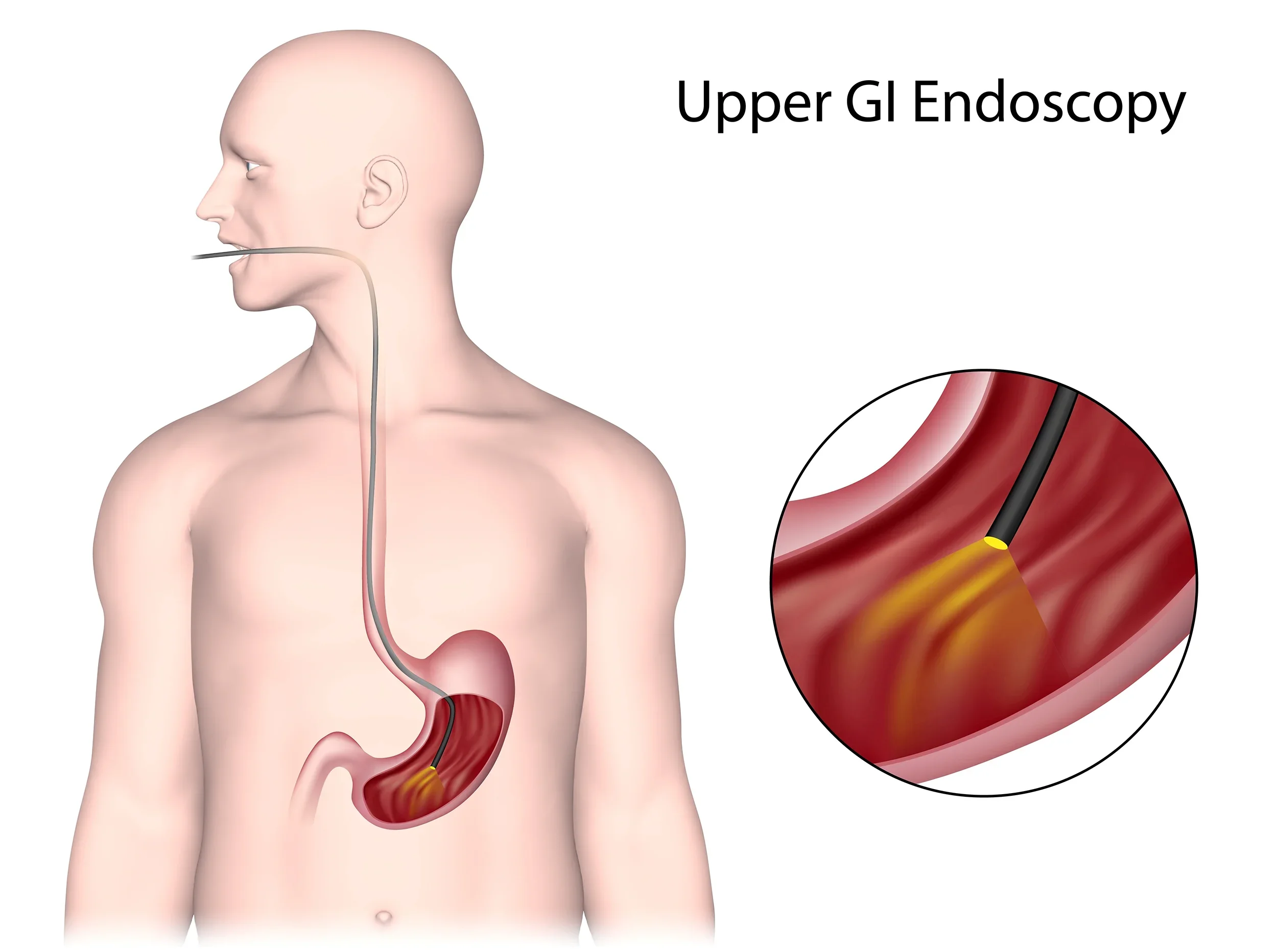
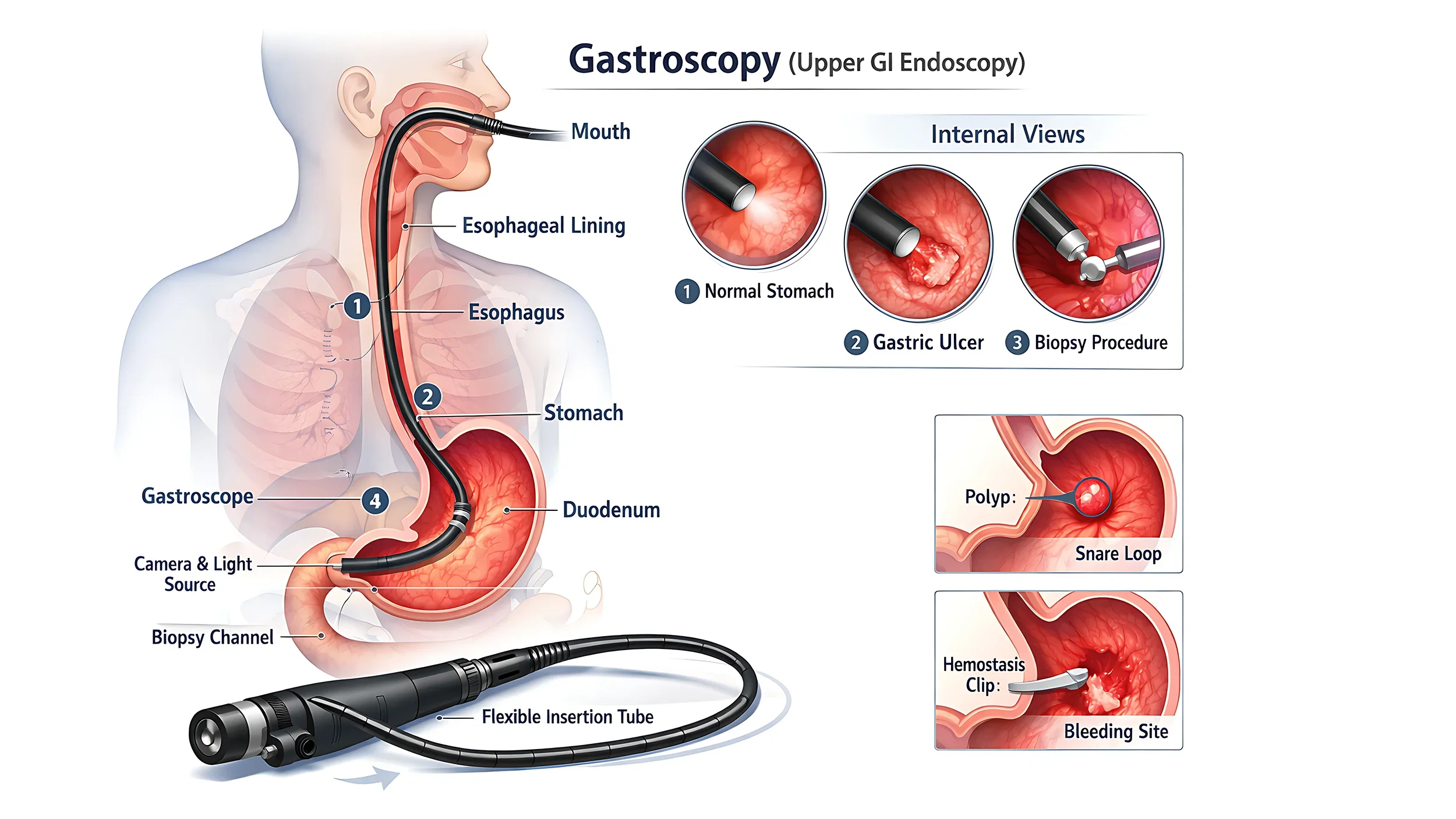
A gastroscopy (also called an upper endoscopy) is a procedure that allows me to look directly at the lining of your oesophagus (gullet), stomach, and the first part of your small bowel (duodenum). It's done using a thin, flexible tube with a camera and light on the end, called an endoscope.
The endoscope is passed gently through your mouth and down into your upper digestive tract. It doesn't interfere with your breathing. Most people have the procedure under sedation, so you're relaxed and comfortable throughout, and have little or no memory of it afterward. The procedure itself usually takes only a few minutes, though you should allow time either side for preparation and recovery from the sedation.
During the gastroscopy, I can take small tissue samples (biopsies) if needed, and treat certain problems directly — for example, stretching a narrowing.
What are the indications?
Gastroscopy may be recommended to investigate symptoms such as:
Persistent reflux or heartburn
Difficulty or pain swallowing
Upper abdominal pain or discomfort
Nausea or vomiting that doesn't settle
Unexplained weight loss
Anaemia or evidence of bleeding from the digestive tract
Benefits of the procedure include:
Direct visualisation — it allows me to see the lining of your upper digestive tract clearly, which is more accurate than imaging tests such as a CT for many conditions.
Tissue sampling — biopsies can be taken during the same procedure if anything needs closer examination.
Diagnosis and treatment together — some problems, such as a bleeding point or a narrowing, can often be treated at the same time they're found.
Reassurance — a normal gastroscopy can rule out more serious causes for your symptoms.
What are the alternatives?
No investigation — for mild or typical symptoms, it's sometimes reasonable to try lifestyle changes or medication first and monitor your response before proceeding to gastroscopy.
Barium swallow or meal — an X-ray test using a contrast liquid, which can show the shape and movement of the oesophagus and stomach, but cannot take biopsies or treat problems directly.
CT scan — useful for looking at structures around the digestive tract, but doesn't provide the detailed view of the lining that a gastroscopy does.
Trial of medication — for symptoms such as reflux, a trial of acid-suppressing medication (such as Somac or Nexium) is sometimes tried first, particularly in younger patients without other concerning features.
Each of these alternatives has limitations, and gastroscopy remains the most direct and thorough way to examine the upper digestive tract, particularly when biopsies or treatment may be needed.
What are the risks?
Gastroscopy is a very common and generally safe procedure, but like any medical procedure, it carries some risks. I will discuss these with you in more detail, but in general terms:
Common, usually minor — a sore throat, mild bloating, or drowsiness from the sedation for the rest of the day.
Less common — reaction to the sedation, or minor bleeding, particularly if a biopsy is taken.
Uncommon but more serious — significant bleeding, or damage to the teeth or lips during the procedure.
Rare — perforation (a tear in the wall of the oesophagus, stomach, or duodenum), which may require further treatment or, occasionally, surgery.
Most people have no complications at all, and the overall risk of a serious problem is low.
What does recovery look like?
On the day — you'll rest in a recovery area until the sedation wears off, usually for around an hour.
Getting home — because of the sedation, you won't be able to drive yourself home, so you'll need someone to collect you and stay with you for the rest of the day.
Eating and drinking — you can usually eat and drink normally once your throat sensation has returned to normal, typically within an hour or so.
Return to normal activity — most people feel back to normal by the next day. Avoid important decisions, driving, or operating machinery for the rest of the day of the procedure due to the sedation.
Results — I'll discuss the findings with you after the procedure.
Follow-up — you'll have an appointment to review the results including any biopsies and discuss any further treatment with me.
Summary
Gastroscopy allows direct examination of the oesophagus, stomach, and duodenum, usually under sedation.
It can both diagnose and, in some cases, treat problems in the same procedure.
It carries a low overall risk of serious complications, though, as with any procedure, some risk exists.
Most people recover quickly and are back to normal activity within a day.
This information is general in nature and is not intended as a substitute for a full discussion of the risks and benefits of the procedure considering your medical issues. If you have further questions or want to discuss whether this procedure is right for you, please make an appointment.
Next Step
A referral from your GP is required prior to your appointment. Call (03) 9923 8066 or email admin@shilton.net.au.