Conditions
Oesophageal and Gastric Cancer
What is it?
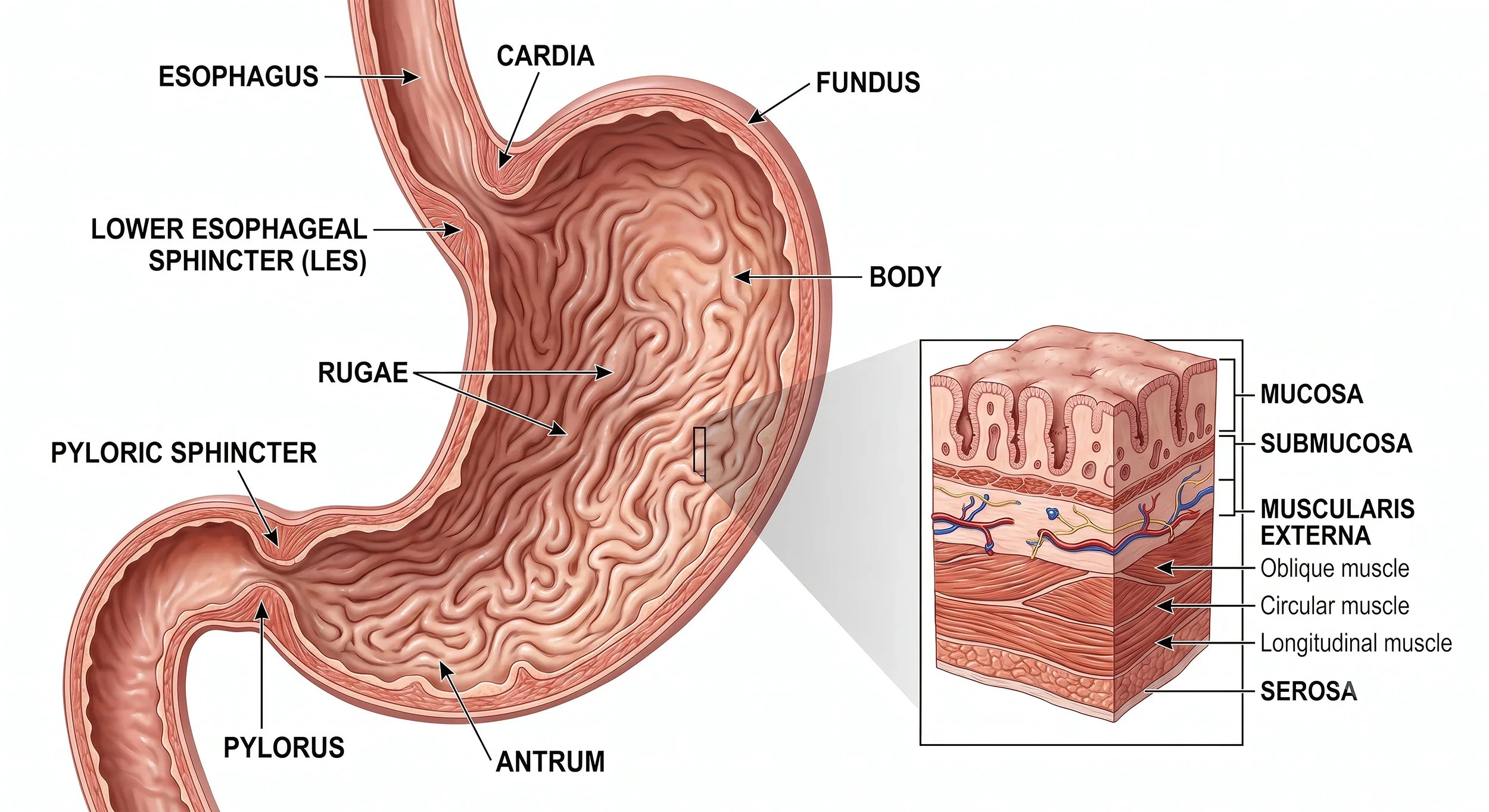
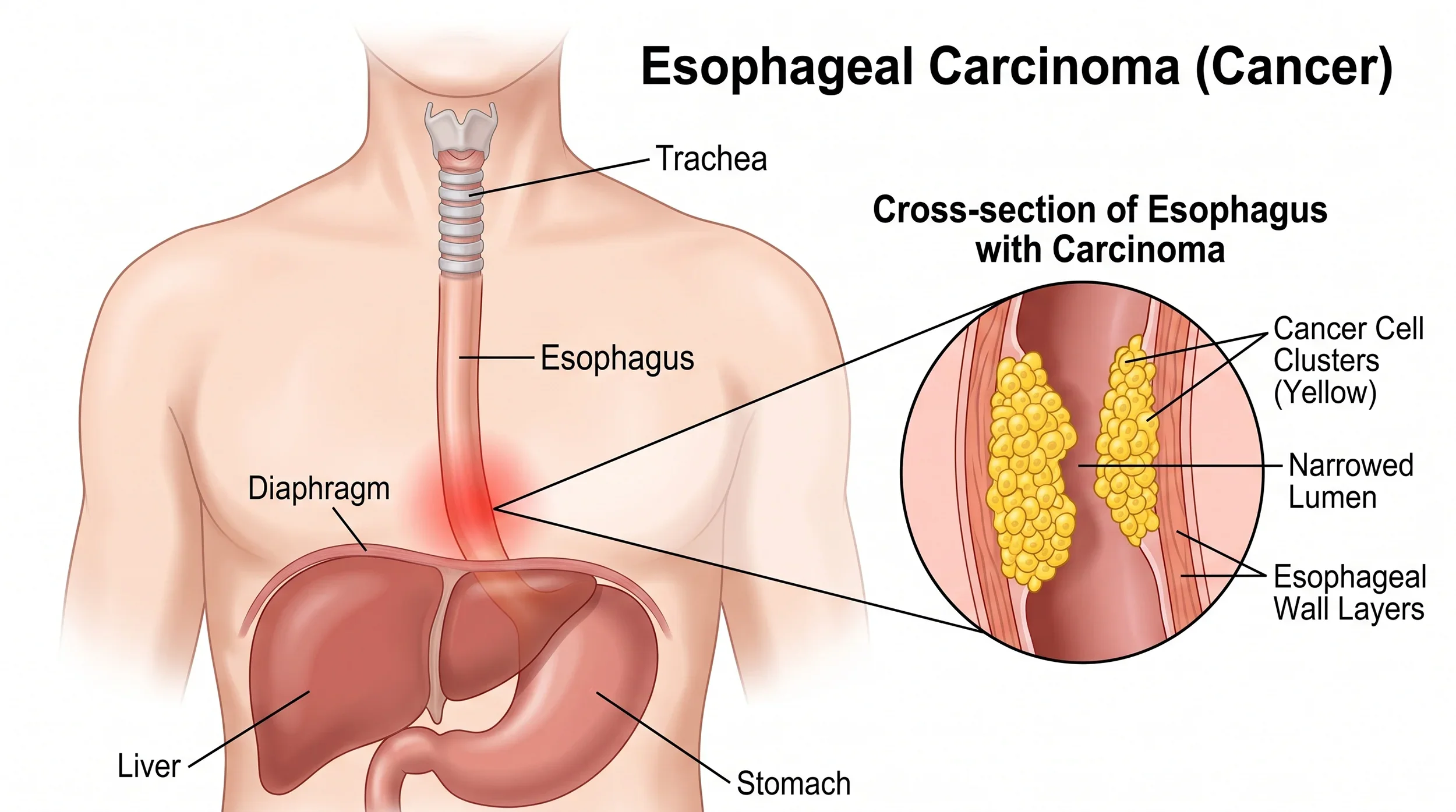
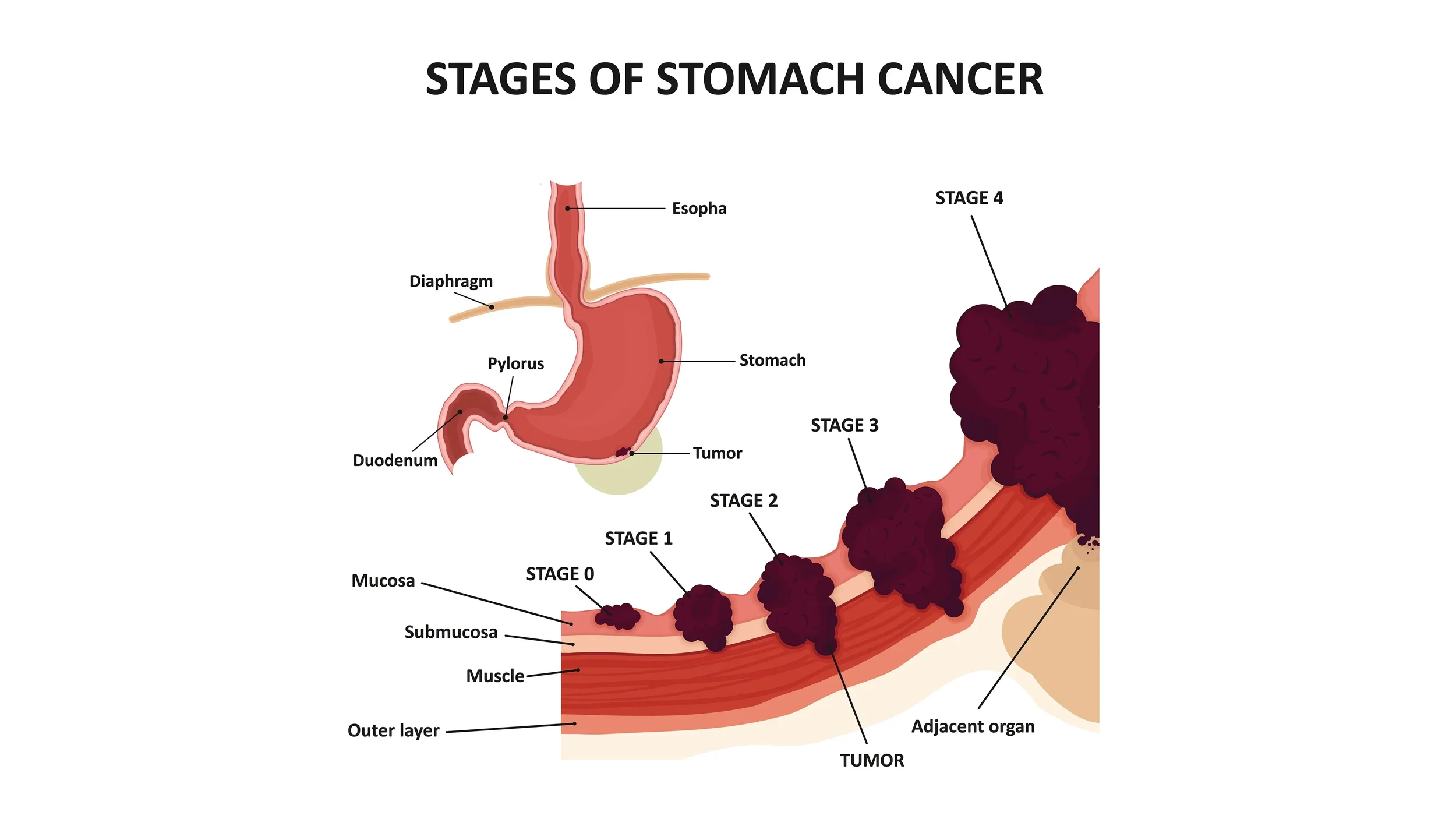
Oesophageal cancer affects the oesophagus (gullet), the tube carrying food from your mouth to your stomach. Gastric cancer affects the stomach itself. Both occur when abnormal cells grow in the lining of these organs.
How common is it?
Oesophageal and gastric cancer are not common cancers. Together they account for 2-3% of cancers in Australia. They are more common with increasing age.
What symptoms should you look out for?
The following symptoms should prompt assessment, particularly if new, persistent, or occurring together:
Difficulty or pain swallowing food, or food feeling like it's getting stuck — never ignore this, even if it occurs just once
Persistent indigestion or heartburn that is new, worsening, or not responding to usual treatment
Unintentional weight loss
Persistent nausea or vomiting
A feeling of fullness after eating only small amounts
Vomiting blood, or vomit/stool that looks like coffee grounds or is black and tarry
New reflux or indigestion symptoms appearing for the first time over the age of 55
If you notice any of these, you should arrange prompt assessment — most causes of these symptoms turn out to be benign, but they need to be checked properly.
What happens next — the pathway
If your symptoms warrant it, you'll usually be referred for an endoscopy (a camera test looking at the oesophagus and stomach), often arranged urgently. If this identifies anything of concern, a small tissue sample (biopsy) is taken, and further scans (such as CT) may follow. Each step is arranged as quickly as possible, so that if treatment is needed, it can start without unnecessary delay.
Who's involved — the multidisciplinary team
Your care is coordinated by a team of specialists working together, rather than any one doctor alone:
GP — coordinates your initial assessment and referral, and remains a point of contact throughout
Gastroenterologist — performs endoscopy and biopsies, and helps establish the diagnosis
Surgeon — also performs endoscopy and diagnostic biopsies, assesses whether the cancer can be treated with surgery, and performs the operation if appropriate
Medical oncologist — oversees treatment with chemotherapy or other drug therapies, where needed
Radiation oncologist — oversees treatment with radiotherapy, where needed
This team meets to discuss each case and agree on the best treatment plan for your individual situation.
Summary
Oesophageal and gastric cancers are usually diagnosed with an endoscopy.
Swallowing difficulty, unexplained weight loss, or persistent new indigestion always warrant assessment.
Investigation is arranged promptly, step by step, to reach a diagnosis (or reassurance) as quickly as possible.
If treatment is needed, a coordinated team plans and delivers your care together.
If you have any questions or concerns about your symptoms, or have been diagnosed with oesophageal or gastric cancer, please make an urgent appointment so I can progress your investigation and treatment planning.
For background on conditions that may require investigation with a gastroscopy, see Conditions and Procedures.
Next Step
A referral is required prior to your appointment. Call (03) 9923 8066 or email admin@shilton.net.au to arrange a consultation.