Conditions
Abdominal Wall Hernias (Inguinal, Umbilical, Ventral and Incisional)
What is it?
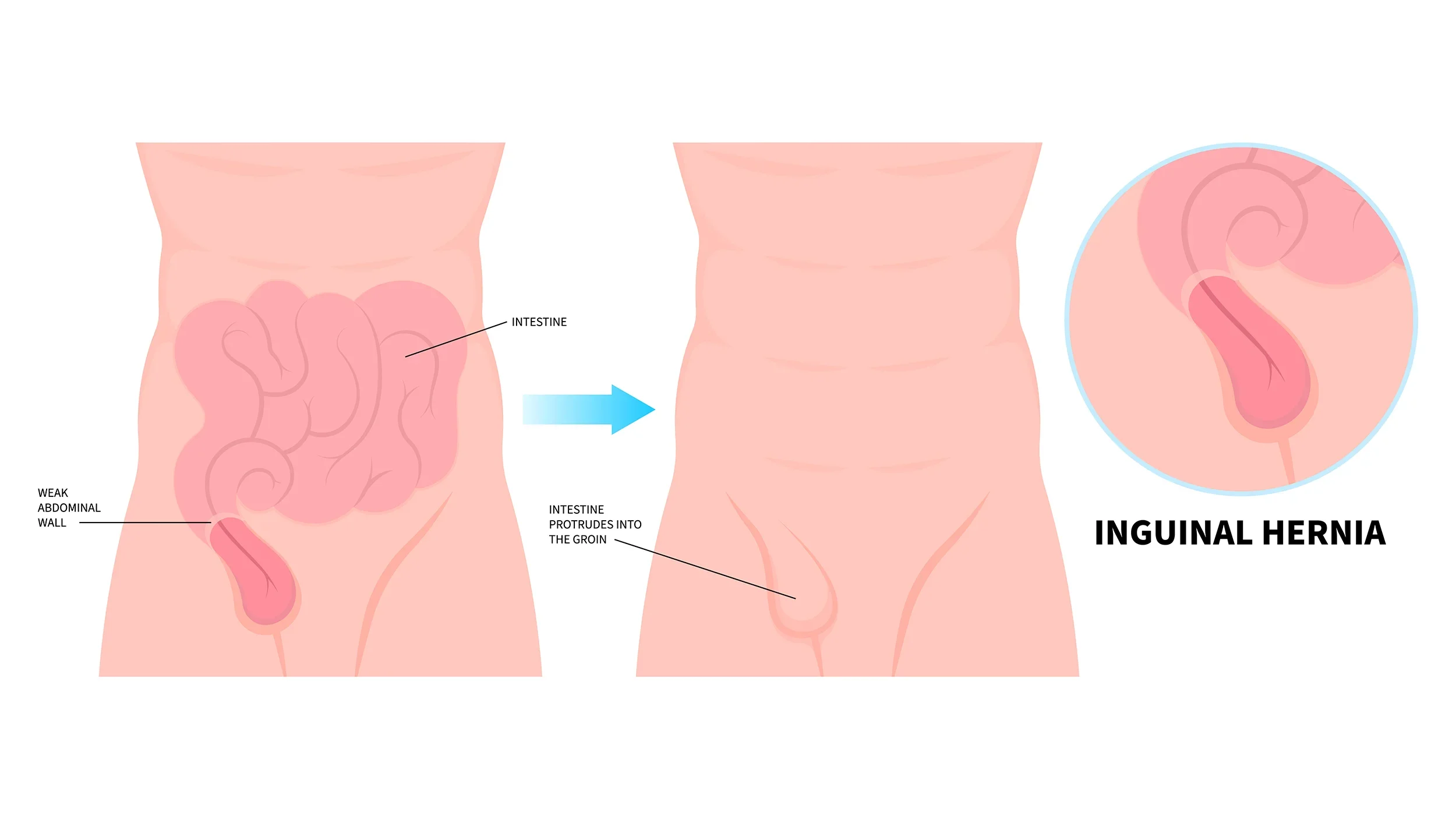
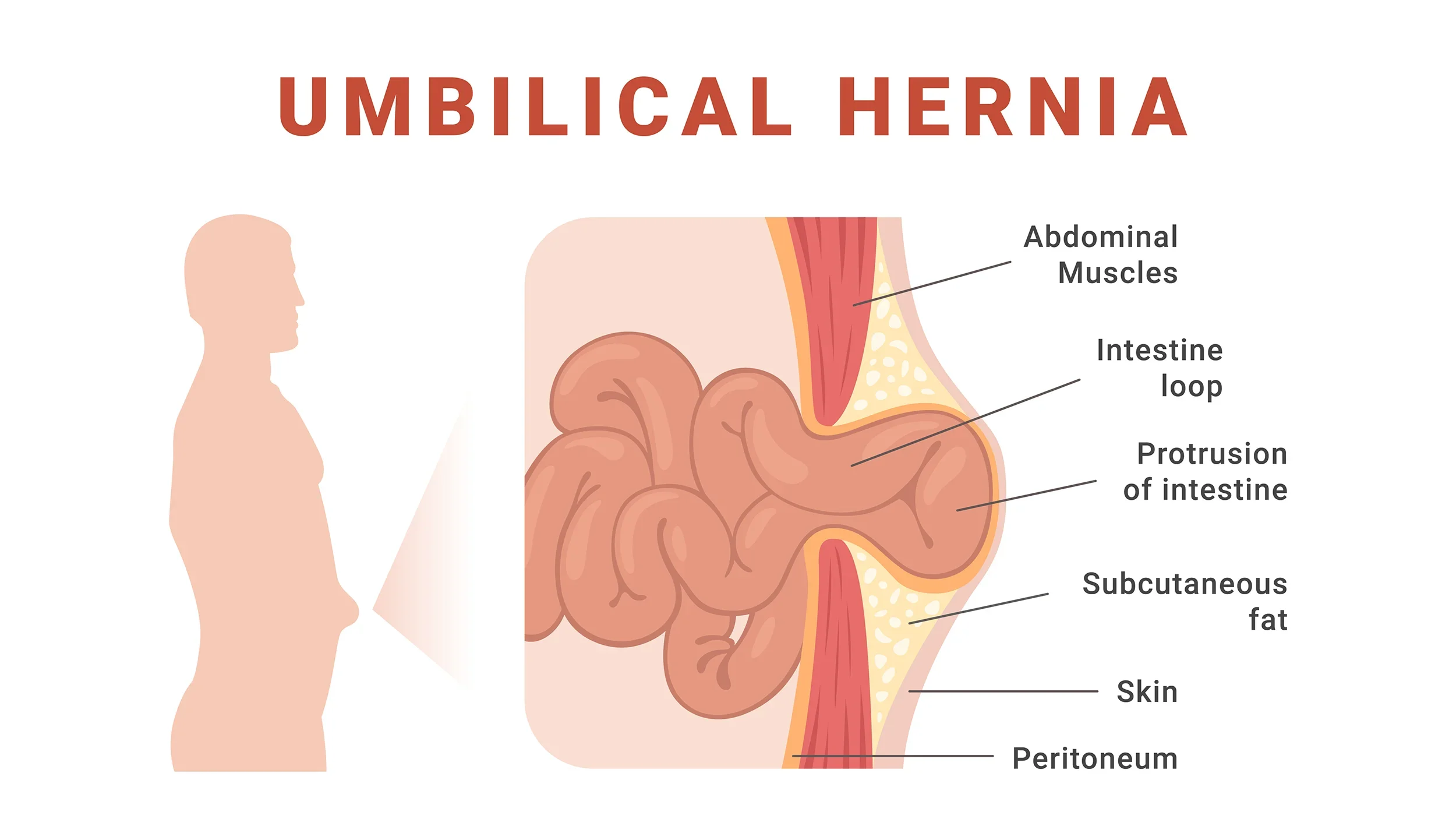
The muscles of your abdominal wall normally form a strong, continuous layer that holds your internal organs in place. A hernia occurs when a weakness or gap develops in this layer, allowing fat or a loop of bowel to bulge through. This creates a lump that you can often see or feel, particularly when standing, coughing, or straining. They are more common with age, and repetitive lifting or straining.
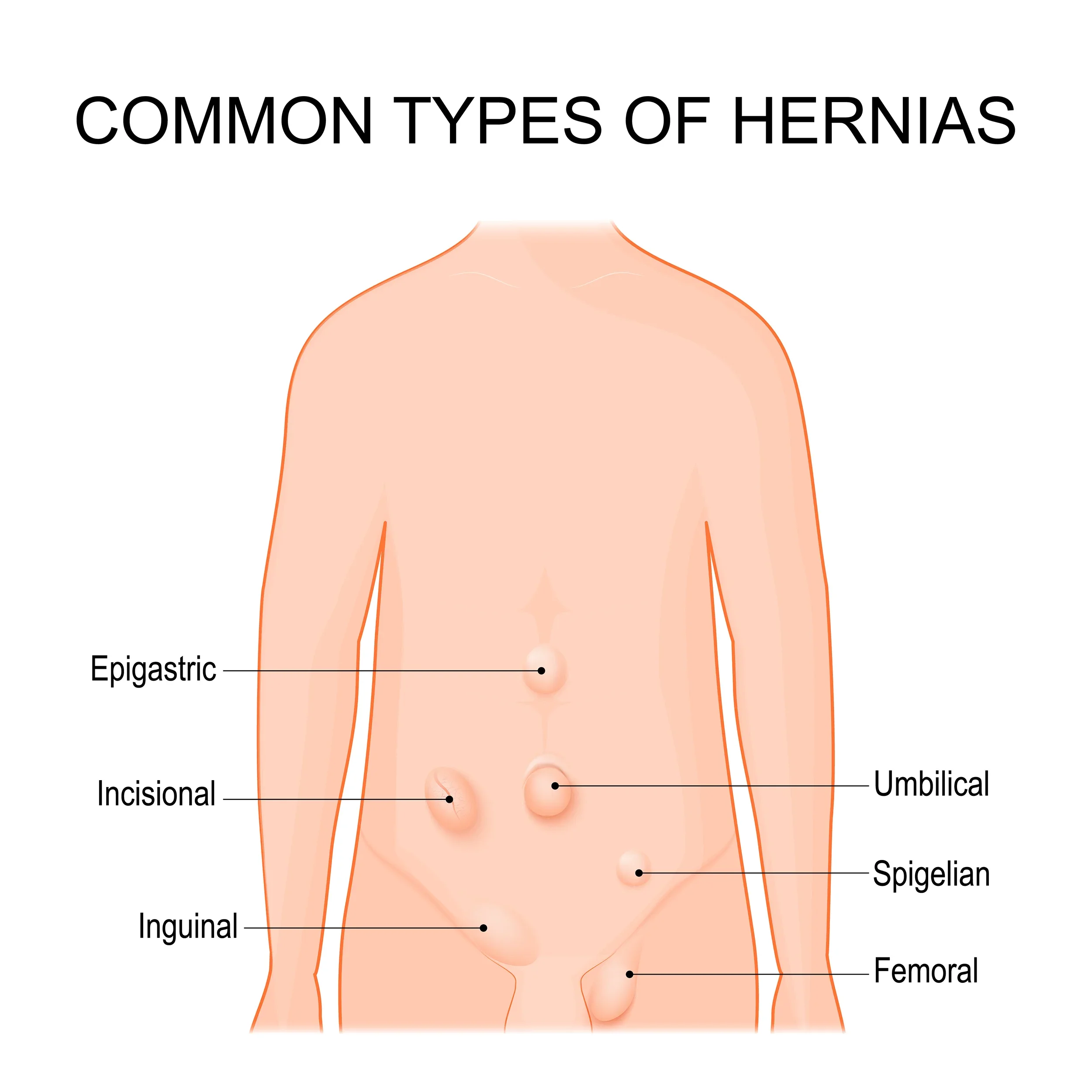
Hernias are named according to where they occur:
Inguinal hernia — occurs in the groin, where there is a natural weak point. It is the most common type of hernia, and more frequent in men.
Femoral hernia — similar in location to an inguinal hernia, more common in women, and more likely to cause issues due to the tight space through which they develop.
Umbilical hernia — occurs at or near the belly button, where the abdominal wall is naturally thinner.
Ventral hernia — a general term for hernias occurring anywhere in the front of the abdominal wall, away from the groin or belly button, often where there is a natural or acquired weakness.
Incisional hernia — develops at the site of a previous surgical incision, where the muscle layer has not fully healed back together.
Hernias do not heal or close up on their own in adults, and they tend to gradually enlarge over time, though the rate varies between individuals.
How common are they?
Hernias are very common:
Inguinal hernias affect around 25-30% of men and a smaller proportion of women at some point in their lives, making them the most frequently repaired hernia type.
Umbilical hernias are common in infants but also occur in adults, particularly with pregnancy, obesity, or conditions that raise pressure within the abdomen.
Ventral hernias become more likely with increasing age, obesity, and chronic strain on the abdominal wall (such as persistent coughing or heavy lifting).
Incisional hernias develop after roughly 10-15% of abdominal operations, and are more likely after wound infections, large incisions (laparotomy), emergency surgery, or in people who are overweight or who smoke.
Other conditions hernias can cause
Most hernias cause a manageable lump and mild discomfort, but problems can arise if the contents become trapped:
Incarceration — the hernia contents become stuck and cannot be pushed back in. The lump becomes firm, tender, and doesn't disappear when lying down.
Strangulation — the trapped tissue loses its blood supply. This is a surgical emergency, as the affected bowel or fat can become damaged within hours.
Bowel obstruction — if a loop of bowel is trapped, it can block the passage of food, fluid, and gas, causing pain, distension, and vomiting.
These risks are the main reason hernias are generally monitored closely or repaired, even when they are not currently causing much trouble.
What symptoms should you look out for?
Typical hernia symptoms
A lump or bulge that is more noticeable when standing, coughing, or straining, and may flatten when lying down
A dragging, aching, or heavy sensation around the lump, often worse by the end of the day
Discomfort that improves with rest
Warning Signs — Seek Prompt Care
These may suggest incarceration or strangulation:
A lump that becomes suddenly painful, firm, or tender
A lump that can no longer be pushed back in (reduced) and does not disappear on lying down
Redness or darkening of the skin over the lump
Nausea, vomiting, or inability to pass wind or open your bowels
Fever
If you experience any of these warning signs, seek medical care promptly (emergency department).
What are the treatment options?
If you have a small, symptom-free hernia: Watchful waiting may be reasonable, particularly for some umbilical or small ventral hernias, with monitoring for any change in size or symptoms. Inguinal hernias in adults are usually still offered repair, as they tend to enlarge and the risk of complications accumulates over time.
If your hernia is causing symptoms, enlarging, or carries a higher risk of complications:
Lifestyle measures
Avoiding heavy lifting or straining where possible
Managing persistent coughing, constipation, or other causes of raised abdominal pressure
Achieving a healthy weight, which can reduce strain on the repair and improve surgical outcomes
Supportive measures
A truss or support garment may ease discomfort but does not treat the underlying defect or prevent complications — these are often most useful in people not able to have surgery performed.
Surgery — hernia repair
This is the definitive treatment, as hernias do not resolve on their own in adults.
Most repairs are done as laparoscopic (keyhole) surgery, using small incisions, a camera, and instruments, though an open repair is sometimes preferred depending on the hernia's size, location, or your surgical history.
A mesh is almost always used to reinforce the repair and reduce the chance of recurrence, particularly for inguinal, ventral, and incisional hernias.
Recovery varies with the type of repair and hernia, but most people return to light activity within 1-2 weeks and to full activity, including heavy lifting, after several weeks.
Incisional and larger ventral hernias may require more extensive repair, occasionally involving advanced techniques to rebuild the abdominal wall.
Summary
Hernias occur when abdominal contents push through a weakness in the muscle wall, and do not heal on their own.
Inguinal hernias are the most common type, while umbilical, ventral, and incisional hernias occur at the belly button, abdominal wall, or a previous surgical scar respectively.
Watch for a lump that becomes painful, firm, or cannot be pushed back in, along with vomiting or fever — these need urgent care.
Surgical repair, using mesh, is the standard treatment for symptomatic or enlarging hernias, and most people recover well and return to normal activity.
If you have any questions regarding your symptoms or hernia, please make an appointment to discuss with me.
For surgical treatment options, see Hernia Repair.
Next Step
A referral is required prior to your appointment. Call (03) 9923 8066 or email admin@shilton.net.au to arrange a consultation.