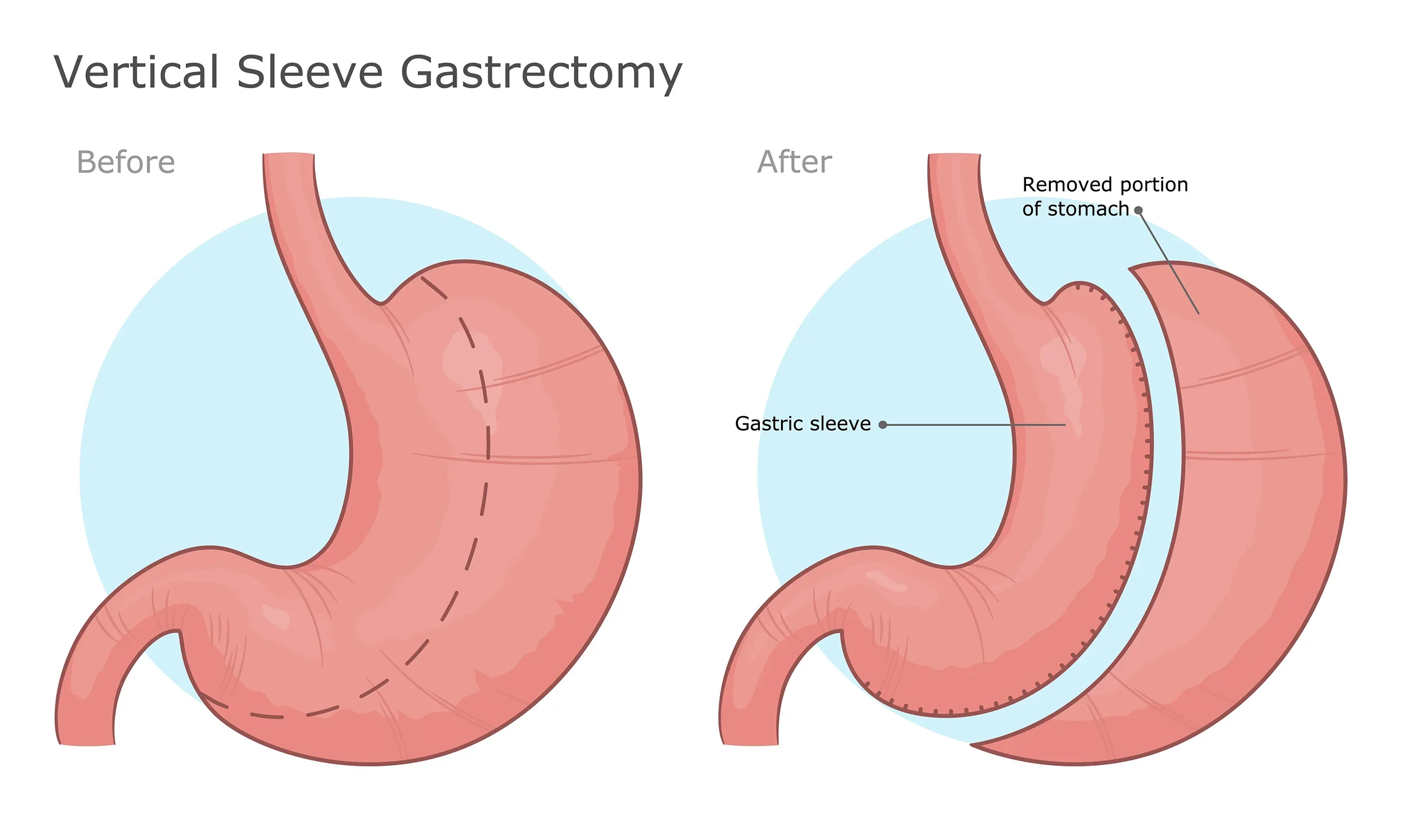
What is it?
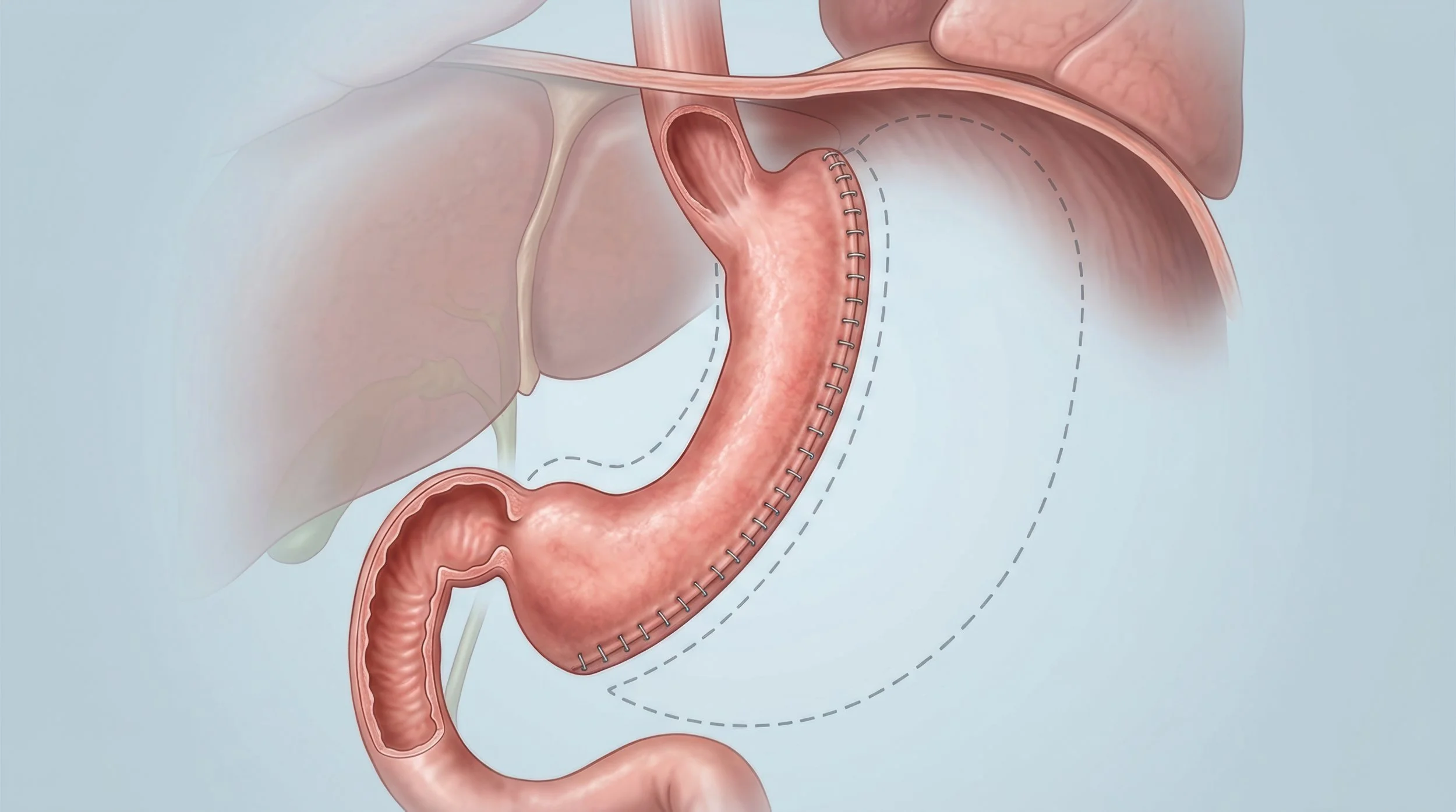
A sleeve gastrectomy is a type of bariatric (weight-loss) surgery. It involves removing roughly 75-80% of the stomach, leaving behind a narrow tube or "sleeve". The smaller stomach holds much less food, so you feel full after a much smaller meal. The operation also reduces levels of a hormone called ghrelin, which is produced in the stomach and stimulates hunger — so appetite itself is often reduced as well.
It's performed laparoscopically (keyhole surgery), using several small incisions, a camera, and specialised instruments. Unlike a gastric bypass, the sleeve doesn't involve re-routing or reconnecting the bowel, which makes it a somewhat simpler operation with a shorter procedure time.
Who is it for?
Sleeve gastrectomy is generally considered for adults with significant obesity, particularly when:
Lifestyle measures and/or weight-loss medication haven't achieved enough improvement
Weight-related health problems are present (such as type 2 diabetes, high blood pressure, or sleep apnoea)
BMI is generally over 35, though a lower BMI may still be considered if significant associated health conditions are present
What are the benefits?
Substantial, durable weight loss — total weight loss is generally around 25-30% of body weight, and this is typically well maintained over the long term
Improvement of weight-related health conditions — many people see significant improvement, and sometimes remission, of conditions such as type 2 diabetes, high blood pressure, fatty liver disease, sleep apnoea, and joint pain
Improved quality of life — many people notice improved energy, mobility, and self-esteem as weight reduces
A relatively simple operation — compared with other bariatric procedures, it is lower risk with few long term issues
Cost-effectiveness — bariatric surgery is generally cost-effective compared with long-term weight-loss medication, or against the savings from managing weight-related health conditions, typically within 18-24 months
What are the alternative treatments?
Surgery is one option among several for managing obesity, and isn't necessarily the first step for everyone. Alternatives include:
Lifestyle and dietary adjustments
A sustainable, balanced eating pattern, ideally guided by a dietitian
Regular physical activity, built up gradually
Behavioural strategies, sometimes with psychological support
Weight loss from these measures alone is generally more modest (around 5-10% of body weight); however, lifestyle change remains important regardless of any other treatment.
Weight-loss medication
Newer medications (such as GLP-1 receptor agonists or combination drugs, e.g. Ozempic or Mounjaro) can produce significant weight loss for many people
Weight loss with medication is often around 10-15% of body weight, but typically requires long-term, ongoing use to maintain results
Other bariatric procedures
Gastric bypass is another commonly performed weight-loss operation, which may be more suitable in some circumstances (for example, if reflux is a significant problem), and I can discuss which procedure best suits your situation.
What are the risks of surgery?
As with any major operation, sleeve gastrectomy carries some risks. Most people recover without any complications, but it's important to be aware of the general categories of risk:
Anaesthetic risks — generally low risk for most people, though this depends on individual health and fitness for surgery
Bleeding — a small risk during or after the operation
Leak from the staple line — an uncommon but serious complication, where the join along the stomach sleeve doesn't heal properly
Infection — a small risk of wound or internal infection
Blood clots — a small risk of clots forming in the legs or lungs, which is why early movement after surgery is encouraged
Reflux disease — sleeve gastrectomy can cause new reflux, or worsen existing reflux
Nutritional deficiencies — a smaller stomach can reduce intake of certain vitamins and minerals over time, which is why ongoing supplementation and monitoring is recommended
Need for further surgery — uncommonly, further procedures may be needed to manage complications or insufficient weight loss
I will discuss your individual risk profile with you in more detail before any decision is made about surgery.
What is the recovery like?
Most people stay in hospital for 2 nights after the operation
Recovery from the operation itself is generally within 1-2 weeks, though this varies between individuals
A staged return to normal eating is required, typically starting with fluids, then pureed and soft foods, before progressing to regular textures over several weeks
Vitamin and mineral supplementation is recommended long-term, with regular blood test monitoring
Ongoing follow-up with me, and a dietitian, gives the best chance of achieving and maintaining results over time
Summary
Sleeve gastrectomy is a keyhole operation that reduces the size of the stomach, leading to significant and durable weight loss.
It can lead to major improvement in weight-related health conditions, alongside lifestyle measures.
Alternatives include lifestyle change, weight-loss medication, and other bariatric procedures such as gastric bypass.
As with any major surgery, there are risks involved, though most people recover without complications. Reflux is the main long term consideration.
Recovery generally takes 1-2 weeks, with a longer period of dietary progression and long-term follow-up afterwards.
This summary is general information only and is not a substitute for a detailed discussion with me, including your individual risks and suitability for surgery. If you have any questions, please make an appointment to discuss with me.
For more information about the pathway to surgery with multidisciplinary support, scheduled follow up and estimated costs, please call 9923 8066.
Next Step
A referral from your GP is required prior to your appointment. Call (03) 9923 8066 or email admin@shilton.net.au.